Showing posts with label SIMI. Show all posts

Thursday, May 23, 2024

Surveillance On 350 Female MNC Staff As ISIS Targets Women Employees


NEW DELHI: In a massive operation, security agencies have mounted surveillance on as many as 350 women employees in the critical security verticals of multinational companies, mostly American in origin.

Sources privy to the development said these women, handling sensitive roles in the security architecture of multinational companies, are being targeted by international terror outfits like ISIS with the ulterior motive of exploiting them for future sinister plots.

A banned terror outfit from Kerala has reached out to these women under the guise of similar jobs or being employed by such companies. They have also taken accommodations in proximity to their residences, the sources said.

The Kerala-based terror group, which subsequently shifted its headquarters to Shaheen Bagh in the national capital over a decade ago, has planted its handlers to tap female employees who might be oblivious to the insidious terror tactic.

While the activities of the local terror outfit were first noticed by the agencies about six months ago, the surveillance net was cast about two months ago.

The women being targeted by the terror groups are mostly employed in Kerala, Karnataka, Andhra Pradesh, and West Bengal.

Besides surveillance, the agencies are also investigating their family backgrounds to enlist support in persuading the women from going astray.

ISIS is estimated to have targeted the Indian diaspora in West Asia, who in turn identified gullible women professionals back home to enlist them for their insidious agenda. These women could be used to cause major operational disruptions in the MNCs, potentially affecting consumer interests and damaging India's brand image.

Through surveillance, the agencies aim to unravel the larger network of terror groups and their expansive footprint to secure national interests, the sources said.

While ISIS has no intention of holding territory in India, they aim to recruit cadres to further the “Jihadi” agenda in the outfit’s theaters of influence.

Without divulging specifics, a source in the Delhi police said, “We do keep a watch on such suspects through technical and human means when we get specific leads.”

What has worried the agencies is that technically proficient youths have joined ISIS ranks. The recent conviction of a professionally qualified Kashmiri couple, the husband being an engineering graduate with an MBA and the wife having an IT background, who joined ISIS and were recently convicted in a terror case registered by the National Investigation Agency (NIA), highlights this trend.

The Kashmiri couple was linked to the Islamic State-Khorasan Province, a front group of ISIS, despite holding degrees like B.Tech and MBA. Jahanzaib Sami Wani and his wife, Hina Bashir Beigh, moved to the national capital in 2019 from Jammu and Kashmir. Jahanzaib was employed at a United Kingdom-based company, and his spouse had a bachelor’s degree in computer applications with an MBA. She served at some banks before taking a break for her wedding on October 6, 2019, when Srinagar was still under lockdown after Article 370 was repealed by the Centre on August 5 that year.

The couple was convicted on terror charges on May 6 in the 2020 case originally registered by the special cell of the Delhi police and subsequently taken over by the NIA.

(With Agency Inputs)


Saturday, April 13, 2024

Fake Identities, Pay In Cash: How Bangalore Café Blast Accused Evaded Cops


CCTV footage obtained by investigators shows the accused checking into Dream Guest House in the Ekbalpur area of Kolkata.

New Delhi: The National Investigation Agency (NIA) has detained two key suspects in the Rameswaram Café blast case after tracing their movements across multiple states. Abdul Matheen Ahmed Taahaa and Mussavir Hussain Shazib were arrested in West Bengal and brought to Bangalore late last evening.

CCTV footage obtained by investigators shows the accused checking into Dream Guest House in the Ekbalpur area of Kolkata. They arrived at the hotel on March 25 and checked out on March 28, staying under fake identities. This was before they headed to East Midnapore district, sources said.

According to sources familiar with the investigation, the accused frequently changed their addresses as they left Karnataka to evade arrest by law enforcement agencies. They checked into multiple small hotels across various states before finally being apprehended. In most places, they paid by cash to avoid leaving a paper trail.

Officials conducted searches at 18 locations across Karnataka, Tamil Nadu, and Uttar Pradesh before tracing the accused to Kanthi, a small city located 180 km from Kolkata.

"The accused had been staying in a lodge in Bengal," officials confirmed.

The NIA arrested Shazib and Taahaa for their alleged roles in the blast that occurred at Rameswaram Café on ITPL Road, Brookefield, Bangalore, on March 1. The explosion left 10 people injured.

"Shazib is believed to have placed the Improvised Explosive Device (IED) at the cafe, while Taahaa is suspected to be the mastermind behind the attack," officials stated.

The NIA took over the investigation on March 3 and had announced a reward of ₹ 10 lakh each for information leading to the arrest of the two accused.

A court in Kolkata granted a 3-day transit remand to the accused on Friday, allowing the NIA to bring them to the Karnataka capital for further investigation. Both suspects will undergo a routine medical test before being produced before the NIA court in Bengaluru.

(With Agency Inputs)


2 Key Accused Terrorist In Rameshwaram Café Blast Brought To Bangalore After Arrest In Bengal


Adbul Matheen Ahmed Taahaa and Mussavir Hussain Shazib were brought to Bengaluru late last evening after their arrest by the National Investigation Agency (NIA). The two men were on the run since the explosion rocked Bangalore café

New Delhi: The two key accused in Bengaluru's Rameshwaram Café blast case, who were arrested in West Bengal yesterday, will be produced in a Bengaluru court today.

Adbul Matheen Ahmed Taahaa and Mussavir Hussain Shazib were brought to Bengaluru late last evening after their arrest by the National Investigation Agency (NIA).

Shazeb and Taha were traced to Kanthi, or Contai, a small city 180 km from Kolkata, after officials conducted searches at 18 locations across Karnataka, Tamil Nadu, and Uttar Pradesh.

The accused, Adbul Matheen Ahmed Taahaa and Mussavir Hussain Shazib, had been staying in a lodge in Bengal, officials said.

A court in Kolkata had yesterday granted a 3-day transit remand to the two men, allowing the NIA to take them to Bangalore.

"Taahaa was the mastermind behind the blast while Shazib placed the Improvised Explosive Device (IED) at the cafe," officials said.

The two men were on the run since the explosion rocked the popular Bengaluru cafe on March 1, leaving 10 people injured.

"It was Abdul Matheen who also worked on the escape plans and managed to evade arrest all these weeks. The duo, along with their co-accused Maaz Muneer Ahmed, were also involved in terror cases earlier," the NIA said.

The NIA took over the probe on March 3 and had announced a reward of ₹10 lakh for information leading to the arrest of each of the accused.

The Rameshwaram Cafe, which suffered extensive damage after the blast, reopened eight days later, with enhanced security measures including metal detectors.

"We have strengthened our security team and are also trying to set up a separate panel of ex-servicemen who will train security guards at all our branches," co-founder Raghavendra Rao said.

(With Agency Inputs)


Friday, April 12, 2024

2 Terrorists Who Plotted, Planted Bomb At Bangalore Café Arrested From Bengal


Bangalore: The two men who plotted and executed the blast that rocked Rameshwaram Café in Bengaluru last month have been arrested from Kanthi in Bengal's East Midnapore district, the National Investigation Agency said Friday morning. Mussavir Hussain Shazeb and Abdul Matheen Taha were caught after a joint operation by central intelligence agencies and police from Bengal, Karnataka, Telangana, and Kerala, and are on the way to Kolkata, the anti-terror agency said in a statement.

The available evidence indicates Shazeb planted the explosive device, placed inside a backpack, at the popular eatery. Taha was responsible for planning the attack and for their disappearance.

These are the second and third arrests in this case; last month Muzammil Shareef, who extended logistical support to the Shazeb and Taha, was taken into custody.

Residents of Karnataka's Shivamogga district, Shazeb and Taha were traced to Kanthi after officials conducted searches at 18 locations across Karnataka, Tamil Nadu, and even Uttar Pradesh.

The blast at Bangalore's Rameshwaram Cafe on March 1 injured 10 people, customers and staff.

Fortunately there were no deaths; the bag containing the explosives was placed in a relatively less crowded area and against a large pillar that absorbed the brunt of the explosion.

After the blast, the NIA released photos and videos of the accused, as seen on CCTV cameras across Bangalore. In one such clip, the accused - wearing a face mask - was seen boarding a bus.

(With Agency Inputs)


Friday, March 8, 2024

NIA, CCB Detain Tow Including Cloth Merchant In Connection With Rameshwaram Café Blast


The teams suspect that one of the two detenues, who was an active member of the banned Popular Front of India (PFI), was part of the plot. The NIA and Central Crime Branch teams suspect that the detenu, who was an active member of the banned Popular Front of India (PFI), was part of the plot

Bangalore: A cloth merchant from Kaul Bazaar in Bellary district in Karnataka and a PFI cadre have been detained by the National Investigation Agency and Central Crime Branch in their joint investigation of the March 1 blast at the Rameshwaram Café here, sources said on Friday.

The teams suspect that one of the two detenues, who was an active member of the banned Popular Front of India (PFI), was part of the plot.

The investigating team believes that he had proximity with some terrorist organisations.

Sources said the PFI cadre is believed to have brainwashed many people, including the man who planted the bomb.

Rameshwaram café blast case: Accused may have travelled to Bhatkal from Ballari, reveals NIA investigation
Meanwhile, the investigation teams found that the man who planted the bomb at the food joint on March 1 travelled from Bengaluru to Tumkur, Bellary, Bidar and then Bhatkal, sources said.

CCTV footages captured by the cameras at the city bus and bus stand shows him that he frequently changed his dress to hide his identity and mislead the investigators.

Meanwhile, the Rameshwaram Café, which was shut since the incident, reopened on Friday.

(With Agency Inputs)


Thursday, March 7, 2024

Rameshwaram Café Suspected Terrorist's Face Revealed; NIA Announces ₹10 Lakhs Reward For Info


More pictures of the Bangalore café blast terrorist have surfaced, showing him travelling on a bus. One of the pictures also showed the suspect without a hat or a mask. The explosion, which took place on March 1 at Rameshwaram Café in Brookfield in East Bangalore, left at least 10 people injured.

While the National Investigation Agency (NIA) on Wednesday announced a cash reward of ₹10 lakh for information about the suspected terrorist bomber in the March 1 Rameshwaram Café blast case in Bengaluru, CCTV camera footage of a suspect has reportedly revealed some aspects of his identity.

The investigation into the blast at the café was handed over to the NIA earlier this week. At least 10 people were injured in the blast at Rameshwaram Café in Brookfield in East Bengaluru on March 1. The explosion is suspected to have been carried out through an Improvised Explosive Device (IED). Soon after the blast, the Karnataka Police registered a case under the stringent Unlawful Activities (Prevention) Act and Explosives Substances Act.

The Indian Express, citing CCTV camera footage, reported that the suspect arrived on a public bus at a bus stop, which is about 100 metres from the café, at around 10.45am. He entered into the café at 11.34am, exited at 11.43am, and subsequently walked to a bus stop over a kilometre away for his escape using public buses.

Unnamed sources said that the CCTV camera trail of the suspect has provided some key leads including his facial features.

More About Bangalore Café Blast Terror Suspect

The suspect used multiple public buses for both carrying the explosive device and escaping the scene afterwards. Along the way, he made several stops, including at a Muslim religious centre a few kilometres away from the incident site during the getaway process, was reported citing the sources.

A baseball cap worn by the suspect at the café has been found at one of the stopover locations during the escape. It is suspected that the suspect changed his clothing at a stop where the cap was discarded.

The improvised explosive device (IED) responsible for the explosion was planted in a corner of the café, close to a hand-washing area. Police sources said the device, containing nuts and bolts as shrapnel, had its impact mitigated by the presence of a nearby wall and tree, the newspaper added.

Karnataka home minister G Parameshwar said business rivalry, impending elections and terrorising investors coming to Bangalore in view of a stable government in the state are some of the angles which the police were working on to crack relating to the blast at a city eatery. Parameshwar made these bizarre claims on 3rd March.

He said police have procured about 40 to 50 CCTV footage.

"There is information that he came by a bus...26 buses passed there around that time. We went through all the 26 buses. We have found the bus in which he travelled. He was wearing a cap, mask and glasses. We are not getting clarity there as well," G Parameshwara had said.


Monday, February 5, 2024

'Unlawful Association': Centre Empowers States, UTs To Declare Simi Banned Group Under UAPA


The Union Home Ministry said in exercise of the powers conferred by Section 42 of the Unlawful Activities (Prevention) Act, 1967 (37 of 1967), the Central government directs that all powers exercisable by it under section 7 and section 8 of the said Act shall also be exercised by the state governments and the Union Territory administrations in relation to the unlawful association SIMI.

The Centre on Monday gave powers to all states and Union Territories to declare the terrorist group Students Islamic Movement of India (SIMI) a banned organisation under the anti-terror law UAPA. On January 29, the Central government had extended the ban imposed on the SIMI for five more years.

While extending the ban on the terrorist organisation, the government had said the group has been involved in fomenting terrorism and disturbing peace and communal harmony in the country.

In a notification on Monday, the Union Home Ministry said in exercise of the powers conferred by Section 42 of the Unlawful Activities (Prevention) Act, 1967 (37 of 1967), the Central government directs that all powers exercisable by it under section 7 and section 8 of the said Act shall also be exercised by the state governments and the Union Territory administrations in relation to the unlawful association SIMI.

As many as 10 state governments -- Andhra Pradesh, Gujarat, Jharkhand, Kerala, Maharashtra, Madhya Pradesh, Rajasthan, Tamil Nadu, Telangana, Uttar Pradesh -- have recommended for declaration of SIMI as an "unlawful association" under the provisions of the Unlawful Activities Prevention Act (UAPA).

The SIMI was first declared outlawed in 2001 when the Atal Bihari Vajpayee government was in power and since then the ban has been extended periodically.

The SIMI has been continuing its subversive activities and re-organising its activists who are still absconding, the home ministry said in its notification.

It is disrupting the secular fabric of the country by polluting the minds of the people by creating communal, disharmony, propagating anti-national sentiments and escalating secessionism by supporting militancy and undertaking activities which are prejudicial to the integrity and security of the country, it added.


Monday, January 29, 2024

Govt Extends Ban Imposed On Terror Group SIMI For 5 Years


The government on Monday extended the ban imposed on terrorist group Students Islamic Movement of India (SIMI) for five years for its involvement in fomenting terrorism and disturbing peace and communal harmony in the country.

In a post on 'X', Union Home Minister Amit Shah said that bolstering Prime Minister Narendra Modi's vision of zero tolerance against terrorism, SIMI has been declared an 'Unlawful Association' for a further period of five years under the Unlawful Activities Prevention Act (UAPA).

The SIMI was first banned in 2001 when the Atal Bihar Vajpayee government was in power and since then the ban has been extended every five years.

"The SIMI has been found involved in fomenting terrorism, disturbing peace and communal harmony to threaten the sovereignty, security and integrity of Bharat," Shah said.

In a notification, the Union Home Ministry said the SIMI has been continuing its subversive activities and re-organising its activists who are still absconding;

The group is disrupting the secular fabric of the country by polluting the minds of the people by creating communal, disharmony, propagating anti-national sentiments and escalating secessionism by supporting militancy and undertaking activities which are prejudicial to the integrity and security of the country, the notification said.


Saturday, April 22, 2023

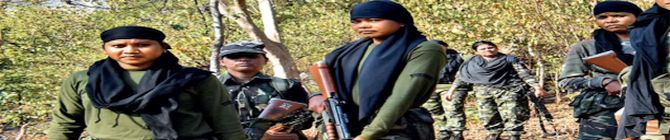
Two Women Naxalites Carrying Bounty of Rs 14 Lakh Gunned Down In MP


Two women Naxalites carrying bounty of Rs 14 lakh gunned down in MP's Balaghat, CM Chouhan congratulates police team

Balaghat: State Hawk force and police team killed two women Naxals carrying a reward of Rs 14 lakh each in an encounter in Madhya Pradesh's Balaghat district in the early hours of Saturday.

The Naxals were gunned down in Kandla forest under Garhi police station of the district. The women Naxals were identified as Sunita (Bhoram Dev Area Committee Member) and Sarita (Khatia Mocha Area Committee Member). Both of them were active in Naxal activities for the past many years. The police team also recovered rifles, live cartridges, weapons, edible stuff and other materials from the spot.

After the killing of the Naxals during the night, Madhya Pradesh Chief Minister Shivraj Singh Chouhan on Saturday morning congratulated the state police, hawk force and district police force for the same.

"Two dreaded Naxalites were killed, who were carrying a bounty of 14 lakh each on their heads, in an encounter in Balaghat in the night. Weapons and many other things have also been recovered from them. I congratulate the soldiers for the same," CM Chouhan told ANI.

The Chief Minister further said that it was the fourth encounter in the last one and half years. The bravery and alertness of the police is that they are continuously killing the Naxalites. A total of eight dreaded Naxalites killed so far in the 1.5 years on whom a reward of about Rs 1.5 crore were announced.

"Our resolution is the rule of law. We will not allow any dacoits to flourish or Naxalites to spread their wings in the state. After Students' Islamic Movement of India (SIMI), we are engaged in eliminating Popular Front of India (PFI) people involved in terror activities from the state. We will not spare the goons and miscreants who disturb the peace and tranquillity of the public. It is the commitment of the MP Government," Chouhan added.


Sunday, March 19, 2023

PFI Wanted Islamic Rule By Waging War Against Govt Says Protected Witness


NIA has virtually squeezing PFI's funding activities and charged 105 people so far, further tightening noose around the banned outfit accused of criminal conspiracy to overthrow the government by violent means

The National Investigation Agency (NIA) has charged 19 persons linked to banned PFI, including 12 National Executive Council (NEC) members, founding members and senior leaders, in its fifth chargesheet in the case. With the filing of the latest chargesheet, the total number of accused charged by the National Investigation Agency in PFI cases (Rajasthan, Kerala, Tamil Nadu, Telangana and Delhi) stands at 105.

The NIA has exposed the nefarious designs of banned Popular Front of India (PFI) and its sinister motive to establish Caliphate in India by 2047 through four stages, including weapons training to cadres and infiltrating police and judiciary. The investigation has revealed that it espoused an Islamic Caliphate by working under the pretext of national integration, communal harmony, and welfare of minorities and weaker sections.

The radical Islamists had planned to unveil a new Constitution based on Shariah law with the help of external forces and organise physical training under the guise of Yoga classes. One of the evil designs exposed by the NIA was to acquire land in Muslim-dominated areas for training and stock-piling of weapons and explosives.

Its national executive committee (NEC), the top decision-making body in the organizational hierarchy of PFI, had devised a well-planned strategy to wage a large-scale war against the Indian government by recruiting and providing weapons training to radicalised Muslim men who pledged their allegiance to the outfit by administration of Oath of secrecy and loyalty. These men were trained to use deadly weapons in various training camps to raise an army of radicalised and fundamentalist militia.

Use of Social Media

PFI had weaponized social media to create conducive conditions for radicalising Muslim youth and regularly posted contents targeting various organs of the State, including judiciary, with a purpose to alienate and arouse the Muslim sentiments against the State, followers of non-Islamic religions. Their social media team was continuously monitoring various Hindu organisations and its affiliates.

Façade of Welfare

The PFI, to achieve its declared objectives of freedom, justice and security of the Muslim community and the marginalized sections of the society, used to undertake various social welfare schemes. But it was nothing but a facade to mask its nefarious and violent terrorist activities to gain support of masses and portray itself as a saviour of the Muslims and portray the entire government machinery as anti-Muslim. Even Christians and liberal Muslims were at the target of PFI to achieve its real objective of overthrowing the democratically elected government.

Database of Opponents

In one of raids conducted by the NIA, more than 450 digital devices and 570 documents were seized and sent for forensic analysis. On the scrutiny of the data from forensic analysis, the agency found that PFI cadres were maintaining a database of detailed information about the leaders of certain organisations who opposed its ideology. The seized content included provocative photos, videos, and pamphlets about sensitive issues like Babri Masjid demolition, Gyanvapi Mosque matter and the term ‘Shaheed’ (Martyr) was used for Babri Masjid. In the case of CAA/NRC, the PFI successfully managed to misguide the minority community with regard to the contents of the proposed CAA/NRC. The PFI, which was instrumental in organizing and funding the protests against CAA/NRC, successfully managed to misguide the minority community with regard to the contents of the proposed law.

PFI, which emerged in the aftermath of the ban on the Students Islamic Movement of India (SIMI), was formed by most of the former leaders of SIMI, including E Abubacker, the founding chairman of PFI. Abubacker was SIMI’s former State President for Kerala. Several active members of PFI had even joined the proscribed terrorist organisation, Islamic State (IS).


Friday, September 30, 2022

From Making IEDs To Creating Civil War-Like Situation, PFI's Plan Was 'Big'

A PFI Terror Kit

PFI leaders had been planning to destabilise the nation, sources within the know of issues submitted

A written content material offering directions on making IEDs was recovered from Mohammed Nadeem, a PFI chief in Uttar Pradesh’s Barabanki.

A doc titled ‘a brief course on methods to make IEDs utilizing simply out there supplies’ was recovered from Ahmed Beg Nadwi’s place, a PFI chief in Khadra, Uttar Pradesh.

“Two Lowrance LHR-80 had been recovered from the residence of Barakathulla, the SDPI’s Ramnad disrict president in Tamil Nadu,” a supply with the safety businesses has stated.

Based on sources, an enormous amount of money was recovered from the residence of Shahid Khan, a PFI chief in Bengaluru, and bodily training (PE) information was recovered from the PFI workplace in Kolkata.

PE supplies had been additionally recovered from the home of PFI’s Maharashtra president, Irfan Milli.

The regulation enforcement businesses have recovered lots of of incriminating supplies from the hideouts of the accused which point out that PFI wished to make India an Islamic nation by 2047.

A number of the key paperwork together with the brochures and CDs associated to Mission 2047 (doc containing materials for changing India into an Islamic State) was recovered from the possession of vp of PFI Maharashtra and PE materials from the home of state president.

The businesses recovered pen drives containing movies associated to IS, Gajwa-e-Hind and methods to unfold their ideology. A Lowrance handheld Marine radio units recovered from Tamil Nadu PFI management and plenty of such different supplies.

The businesses stated that PFI had a protracted historical past of claiming victimisation however the actuality was reverse of it.

It stated that the violence orchestrated by PFI’s leaders and cadres publish arrest of its leaders uncovered their violent tendencies.

Southern states, particularly Kerala and Tamil Nadu the place PFI has appreciable presence, witnessed spate of violence in aftermath of arrest of PFI leaders.

Many members of the PFI engaged in violence together with throwing petrol bombs and arson in a number of locations in Tamil Nadu and Kerala in protest towards the motion by the NIA.

The PFI broken a number of authorities and personal autos, hurled petrol bombs at a number of homes and held street blockades, creating inconvenience to the general public.

OMA Salam, the PFI Chairman is presently beneath suspension from his division Kerala State Electrical energy Board (KSEB) and present process departmental enquiry for his unauthorised journey overseas and in addition holding the publish of PFI Chairman whereas being a authorities worker.

A diary recovered by ED from Salam’s shut affiliate M. Mohammed Ismail revealed a couple of sinister plot of PFI and Salam to create a civil war-like state of affairs in India.

Nazarudheen Ealamaram, nationwide secretary of PFI, has 10 circumstances registered towards him beneath totally different sections since 2009.

P. Koya, nationwide govt council member of PFI was a “dedicated SIMI chief”, and an “Ansar” throughout 1978-79. He was additionally concerned in making a divide between Gujjars and Malis of Rajasthan.

He together with EM Abdul Rahiman, vp of PFI was privately hosted by IHH, an Al-Qaeda linked Turkish charity organisation.

EM Abdul Rahiman was the All India Basic Secretary of SIMI in 1984 and was additionally related to Karuna Basis, a pro-SIMI organisation.

Anis Ahmed, Basic Secretary of PFI had overtly supported and praised Hamas.

“The checklist is lengthy. It can take not less than dozens of pages simply to explain the legal previous of the PFI management. The purpose is — many of the PFI leaders have a darkish previous full of hate for the nation and its institutions. All they need is the implementation of their very own ideology at any price. They don’t have any concern for the frequent Muslims,” a supply stated.


Saturday, September 24, 2022

Meticulous Planning By NSA Doval Led To Operation PFI

NSA Ajit Doval personally supervised the entire operation against PFI

Not one bullet was fired in the sensitive operation against the Popular Front of India on Thursday. The National Investigation Agency and the Enforcement Directorate in a joint operation raided PFI centres across the country and arrested 106 people including some of its top leaders.

The operation was conducted under the close supervision of National Security Advisor, Ajit Doval.

According to reliable information, the action against the PFI was in the works for close to two months. In fact, on the day when Prime Minister Narendra Modi was in Kochi to commission INS Vikrant, NSA Doval was working behind the scenes plotting action against the PFI in Kerala.

Such was the stealth of the operation that even the state police forces were not informed about it for fear of information leaking.

More than 200 officials of the NIA, the ED and the state ATS were involved in the operation.

Maintaining complete secrecy and to avoid any untoward reactions, the raids were conducted in the middle of the night and extended till early morning resulting in the arrest of 106 PFI members.

Some of them were transported to Delhi by a special aircraft for interrogation.

In the run-up to the operation, two high-level meetings of MHA officials and the central agencies were held in Delhi. Home Minister Amit Shah met officials of the NIA, ED and IB on August 29 to discuss the plan. NSA Ajit Doval and Home Secretary Ajit Bhalla were also present in the meeting.

Among those taken into custody on Thursday were PFI National President MS Salam, and Delhi PFI chief Parvez Ahmed. They are accused of organizing terrorist camps, terror funding and teaching bigotry to people.

Among other things it is alleged that PFI instigated the anti-CAA protests.

The central government has been closely monitoring the activities of the PFI since 2017. The NIA had submitted a detailed report on it to the Home Ministry. Due to its nefarious activities, many states have been demanding a ban on its activities over a period of time. It is alleged that after the ban on Students Islamic Movement of India (SIMI) in 2001, many of its leaders and cadres had joined to form the PFI.

Many persons arrested from Kerala who had joined the ISIS were believed to have got their indoctrination in PFI. In addition, the PFI is said to be behind the plot to establish Ghazwa-i-Hind in Bihar.

What If PFI?

The PFI was formed in 2006. It was the result of a merger of three organization – The National Development Front (NDF) in Kerala, Manitha Neethi Pasarai (MNP) in Tamil Nadu and Karnataka Forum for Dignity.

Some of the cadres and leaders were associated with SIMI, the terrorist organization that was banned in 2001.

PFI’s stated objective is to make plans for social, economic and educational developments of minorities and backward classes.

It has a political wing – Social Democratic Party of India, a student’s wing – Campus Front of India, women’s wing – National Women’s Front, and a NGO – Rehab Foundation of India.

PFI’s Troubled Past:

In 2014, the Kerala government submitted an affidavit in the High Court saying its members were involved in at least 27 political murders.

13 PFI workers were convicted in 2015 for chopping the hands of a Kerala professor in 2010 for allegedly insulting Prophet Mohammed.

In 2016, 2 PFI members were convicted for organizing a terror camp in Kerala’s Kannur.

In 2016, some ISIS suspects were arrested who turned out to be PFI members.

In 2020 one of the bombers who attacked a Gurudwara in Kabul killing 25 people was a PFI member.

Most recently, the PFI has been under the scanner for its role in the N-E Delhi riots.


Saturday, July 23, 2022

Dealing With PFI And Other Terror Threats: India Needs Its Own Patriot Act


It is not enough to take cosmetic action like banning the SFI, like the SIMI before it. The people involved in this form of warfare must be rounded up and punished on an urgent basis

With the proliferation of an organised series of movements such as the PFI and erstwhile SIMI, groups of radicals are openly threatening anyone they wish to target. These range from ordinary Hindus like a tailor beheaded in Udaipur, and another victim in Amravati, Maharashtra.

It is not enough to take cosmetic action like banning the SFI, like the SIMI before it. The people involved in this form of warfare must be rounded up and punished on an urgent basis. After 9/11, which took place during the George W Bush presidency, over two decades ago, in 2001, America has not had any Islamic terrorist attacks or incidents within its landmass.

This is mostly thanks to the stringent Patriot Act which was passed just two months after the warlike attack that killed thousands, destroyed two high-rise towers at the World Trade Centre in New York, destroyed part of the Pentagon, brought down three fully laden passenger planes, even as one of them was headed for the Capitol in Washington DC, or possibly the White House itself.

The Patriot Act, as it is popularly known, practically bypassed the normal legal system in the US, to crack down hard on suspected terrorists, their sympathisers and supporters, their sources of funds and their flows, both at home and abroad.

This, alongside very strict and ruthless covert action to foil and nip terror plots in the bud with extreme prejudice. It was designed to intercept, obstruct and prevent another terror attack, big or small in the US.

It held in abeyance most of the provisions of the American Bill of Rights. It could jail anybody on mere suspicion, even if there was no criminal action or record. It could access all public and private documents, tap phones, confiscate funds, blend intelligence and law enforcement, pretty much as the people working under it saw fit.

It worked in tandem with Guantanamo Bay jail outside the jurisdiction entirely of the American legal system. This place, still operational, despite promises to close it down by President Barack Obama, is notorious for its third-degree methods to extract information and confessions. The jail was located in Cuba and housed terrorists captured, quite often, in Afghanistan.

The Patriot Act attacked international terrorism as it affected America, head on, without apology.

The law was allowed to lapse in 2020 when the US House of Representatives (Congress), did not extend its provisions. It was modified in 2015, loosening some of its draconian provisions, most notably its powers to invade privacy.

The Patriot Act, internally, was combined with massive US and NATO military action against Afghanistan (purportedly the home of Al-Qaeda) though parts of it were also based in Sudan. There was military action also against Iraq (where a bogus WMD charge, as it turned out subsequently, was levelled). All of this did not however result in the destruction of terrorism internationally.

This was mainly because the fountainhead of terrorism, namely Pakistan, was not harmed in any way. Even today, Pakistan enjoys covert support from America which sees it as a geo-strategic asset in the region. This, despite multiple and clear links of the 9/11 attackers to it. The attackers were mostly Saudi nationals radicalised by Al Qaeda, but trained and indoctrinated in Pakistan by the ISI and its agents.

India is suffering every day because of the work being done out of Pakistan. But the only way India can comprehensively attack and destroy terrorist infrastructure and personnel, including that of the ISI, within Pakistan, is with American permission. A Balakot strike or covert Research & Analysis Wing action is surely not enough. But with US support, the implied diplomatic and military backing, it would stop China/Pakistan from acting injudiciously.

This nod may be forthcoming, in stages, as we go forward, starting with permission to reclaim PoK and Gilgit-Baltistan. Back-channel talks are said to be ongoing. This action on India’s part would at once put a severe crimp in Chinese and Pakistani hegemony in the area.

The reason for this changed perception and stance is American strategic backing for a free Tibet, and a push back against an economically weakened China at this time.

In the meantime, as it will surely result in a multiple-front limited war, India is busy building up its military muscle.

The head of Al Qaeda, Osama Bin Laden, who admitted to being the inspiration for 9/11, if not its chief planner, was sheltered for years in Abbottabad in Pakistan, next door to a Pakistani military base. It was almost as if Bin Laden enjoyed Pakistani protection, with the US in the know.

He was eventually eliminated by a US helicopter-borne covert commando action, just before President Barack Obama won his second term in office. Was this too agreed by Pakistan? It probably was, given its meek acceptance of the violation of its sovereignty. This sort of intrusion was overlooked, not only in this instance, but in multiple drone strikes against terrorists within Pakistan territory, carried out by the Americans from within Afghanistan.

In the case of America, with a miniscule native Muslim population of some 4 percent of its own, the Islamic terror threat is essentially from imported actors and foreign funding. However, random shootings of innocents and children by the natives themselves, some actions with political and white supremacist overtones, have become rampant lately.

America is a highly armed society, the right to own and bear firearms of various kinds, is protected by law.

In India, as the ascendancy of the Hindu Nationalist BJP seems never-ending going forward to the 200 million plus Muslims, more and more bloody attacks against the Hindu majority are becoming commonplace.

This includes desecration of mandirs, and attacks against Hindu religious processions as they pass through Muslim heavy areas. These, in turn, lead quite often to riots, arson, loot, rape, murder, mainly in states not run by the BJP. The Hindu abhorrence to cow slaughter is openly provoked, and sometimes raw meat is flung into mandir courtyards. The powers that be in opposition states generally attempt to gloss over such open hostility, often aided by sections of the Liberal-Left media.

But, with the proliferation of an organised series of movements such as the PFI and erstwhile SIMI, sponsored by the Pakistani ISI and other leading terror groups from Pakistan and Syria, groups of radicals are now openly threatening anyone they wish to target. These range from ordinary Hindus like a recently beheaded tailor in Udaipur, and another victim in Amravati, Maharashtra, to BJP MPs, journalists, businessmen, and even the prime minister.

The by-and-large non-violent Hindu population still constitutes nearly 80 percent of India’s 1.44 billion. It is influenced by the Gandhian notions of Ahimsa that has been widely publicised ever since the days of pre-independence. But even this docile population is now moving towards shunning Muslim employees, businesses, and places of Sufi worship, once generously patronised by Hindus.

The Muslims who have chosen to stay on in India after the creation of Pakistan in 1947, have been left alone by the State, only to be incited by radical maulanas and muftis. They are trained to see all others as Kafirs, in the mosques, dargahs, seminaries and madrassas, as well as the tight-knit mohallahs the community generally inhabits.

In this age of multiple TV news channels and social media, all this is neither hidden nor appreciated by the Hindu majority. The price of Muslim incitement, using agent provocateurs, foreign hands, money, opposition politicians, is almost instant exposure and Hindu voter consolidation in favour of the BJP.

The Government of India meanwhile is making great strides in improving its ties and commerce with important Islamic countries in the Arabian /Persian Gulf, North Africa, the Asia-Pacific, Africa. These nations understand India as a tolerant multi-ethnic and religious country, and are not taken in by Pakistani/Left-Liberal propaganda, aided sporadically by Turkey.

This has resulted in the Islamist onslaught we are experiencing in India, threatening and bloody as it is, being regarded internationally as a localised affair that has no legs or future.

But, as a consequence of this diplomatic gain, the Indian State is reluctant to crack down on radical elements domestically. The Pakistani ISI is, in fact, taking advantage of this, and also the emphasis on irrefutably proving guilt in the Indian judiciary. Even tough laws like UAPA end up unable to hold terrorists after a single court-hearing. Jihadists laugh at the system and game it shamelessly.

Therefore, the need is rife for an Indian Patriot Act that the judiciary cannot interfere with. An insurgency with war-like features cannot be treated as if it is business as usual.

Political parties that regard Muslims as their reliable vote banks have pampered and appeased the community over the years, and continue to do so to this day. They seek to manufacture an equivalence between militant Muslim organisations that openly promote jihad and the creation of a ‘Ghazwa-e-Hind’ by 2047, and a bogus Hindu Terror.

They encourage a radicalised mass of violent Muslims and call them no more than the equivalent of the RSS. This is outrageous because not only is the RSS the ideological parent of the vastly membered BJP, but a most benevolent social working NGO, the largest in the world.


But where is the violence emanating from the RSS? There is not even a provocative statement, legion from the Islamists. Even laying the assassination of MK Gandhi at its doorstep is in effect, a lie.

Nathuram Godse had his own convictions apart from those espoused by the RSS of his day, and today, when we see the result of not insisting all Muslims vacate India at partition, his views are being appreciated by many.

Still, some opposition political parties, the Congress prominent amongst them, try to counter the charges of motivated and financed Islamic aggression by citing a fictional Hindu Terror. So much so, that it tried to fabricate a Hindu Terror hand, probably in cahoots with Pakistan, to the ghastly events of 26/11. If it were not for Kasab, caught alive, they might have made it stick, particularly as the UPA led by Congress was ruling at the time.

Trading charges of communalism and culpability is now an insufficient method to take care of a serious internal security threat. It is on par if not greater than that posed by Maoists in the forests of the Indian Deccan and the East.

There is an urgent need to treat seditionists, traitors, terrorists and their ilk as separate from the masses of ordinary law-abiding Muslims. This, before the propagandists of the radical fringe, out to destroy the law and order situation and the fabric of the nation, identify all Muslims as the victims of a Hindu statist oppression. To an extent this has happened already as the government failed to make the distinction between the two with emphasis. Instead, it chose to ignore the growing problem.

Like the Naxalite movement before this, that originated in the 1970s, and the Maoist/Urban Maoist movement ongoing, the only way to quell it is through determined force applied accurately.

The same determined force broke the back of the separatist movements in Punjab and in the North East. It is not something the government can shy away from, and leaving it for later is only making the problem worse.

It is not enough to take cosmetic action like banning the SFI, like the SIMI before it. This results in its reappearance in different forms and clusters, and does not tackle the menace. The people involved in this form of warfare, because that is what it is, must be rounded up and punished on an urgent basis.


Wednesday, March 23, 2022

An Exhaustive Examination of How Terror Groups Exploded in Southern India


Over the years, southern India has become a hotbed for several extremist and radical outfits like SIMI, Al Ummah, Indian Mujahideen, and AQIS. Some of these have aligned and identified themselves with bigger terror groups like the Lashkar-e-Taiba, al-Qaeda, and Daesh or Islamic State

India this month pointedly spoke at the United Nations Human Rights Council (UNHRC) about how Pakistan had failed to meet the global demand for the dismantling of its “terrorism mill” that churned out jihadists across South Asia. This demand to curb terror organisations follows up on the 2020 United Nations report that warned India of a significant rise in the numbers of homegrown terrorists.

The report specifically mentioned the states of Karnataka and Kerala being the locations from where al-Qaeda in the Indian Subcontinent (AQIS) had been identifying and training militants. The National Investigation Agency (NIA) along with state intelligence departments have been keeping a close watch on the movement and growth of several Indian-origin terror outfits.

The Rise of Terror Groups In Southern India

Over the years, southern India has become a hotbed for several extremist/radical outfits like SIMI, Al Ummah, Indian Mujahideen and AQIS. Since the early 1990s, there has been an exponential growth in radicalisation and radical groups in the region. Some of these have aligned and identified themselves with bigger terror groups like the Lashkar-e-Taiba, al-Qaeda, and Daesh or Islamic State (ISIS).

The recent arrest of three members of the Tamil Nadu Thowheed Jamath (TNTJ) for threatening Karnataka High Court judges of “possible" murder over the hijab verdict brings back to focus the role of small outfits linked to various terror organisations, particularly in southern India.

TNTJ has been perceived to be linked to the Popular Front of India (PFI), though it calls itself a “non-political, socio-religious, community service” organisation.

“Earlier the madrasas were used to indoctrinate young minds. The seniors would talk of how their religion is under threat and it is these young minds that will let Islam flourish. Slowly, they began to use technology like social media platforms and messaging services but in stealth mode,” said a senior Tamil Nadu-based police official who requested anonymity.

Many of the terror groups claim to be organisations dedicated to social service. They target young impressionable minds and brainwash them to “help protect their religion. Groups such as TNTJ are no less. Their speeches threatening the judges smack of inciting a rebellion and anti-national feelings,” said Gopal Hosur, former Inspector General of Intelligence, Karnataka Police. “These radical groups target uneducated or semi-educated youth to indoctrinate them. They follow the policy of catching them young, impart training while they are fit, and then let them out to spread their extremist views.”

Many of them receive funding from terror organisations like the LeT and ISIS, said a senior Karnataka police official associated with several investigations related to terror cells in the state. “These small splinter groups receive training, weapons, and, when the time comes, are expected to join hands and provide local support on the ground,” he added.

Even during the protests against the Citizen’s Amendment Act (CAA) and National Register of Citizens (NRC) beginning in 2019, Indian agencies found several sleeper cells trying to exploit the situation to radicalise and attract more people into their fold. They claimed that their religion was being threatened and the “young and willing” should join hands to save it.

“The sleeper cells of such radical groups have always been there, but they always wait for an opportunity to raise their heads. They wait for the opportune time to act,” the official added.

These terror organisations would largely target young vulnerable men and women who are heavily influenced to take the path of “jihad". They talk to them about the greater “Islamic cause” and ensure the potential recruits are completely radicalised before inducting them full-time. They would be shown videos and graphic photographs of those who became “martyrs”. The young impressionable minds would also be subjected to images of torture to create anger and fear.

Increased Radicalisation After Babri Masjid Demolition

The trend of radicalisation is said to have gained momentum after the Babri Masjid demolition in 1992. Islamic cleric Abdul Nasser Madani, who founded the Islamic Seva Sangh (ISS), began delivering speeches and meetings to influence the “community to stand up against atrocities”. The now-banned ISS radicalised individuals like Thadiyantavide Naseer, who Indian agencies believe is the South India commander of the Lashkar-e-Taiba.

Here are some of the extreme radical groups that are being closely monitored by agencies such as the NIA and state intelligence departments-

Popular Front of India: The Popular Front of India (PFI) predominantly operates out of Kerala, a state where the NIA believes several Muslim radical organisations have been mushrooming. The PFI is an offshoot of its predecessor, the National Democratic Front (NDF), which was formed in 1993, a year after the Babri Masjid demolition. The NDF allegedly was formed to wage war against the oppressors of Muslims in India.

In 2006, the NDF merged itself with other like-minded organisations— Manitha Neethi Pasarai (MNP) in Tamil Nadu and the Karnataka Forum for Dignity (KFD) to form the Popular Front of India. According to the NIA, the outfit has a presence in almost 23 states in the country. Many states in India have banned the organisation for “anti-national activities” and the Centre is also contemplating outlawing it nationwide.

The PFI began portraying itself as a platform to help change the lives of the Muslim community and emphasising on bringing about socio-economic, cultural and political empowerment of those living in India. The group also has immense political clout, so much so that political parties in Kerala and Karnataka feel that a ban on the PFI could be perceived as an anti-Muslim move. However, the organisation continues to remain on the radar of the government as it has been observed that many PFI followers switched loyalties to the Islamic State.

Three years later, the PFI launched its political arm, the Social Democratic Party of India (SDPI), with the tagline “to fight for the advancement and uniform development of all the citizenry, including Muslims, Dalits, Backward Classes and Adivasis". The same year was launched the Campus Front of India (CFI), said to be PFI’s student wing, and the forum at the fore of the hijab controversy that has rocked Karnataka. The CFI though had told News18 that it doesn’t have an affiliation with any political party or organisation.

Students Islamic Movement of India (SIMI): Formed in 1977 in Uttar Pradesh’s Aligarh, SIMI has been known to be the student wing of the Jamaat-e-Islami Hind. The organisation banned by the Indian government in 2001 under the subsequently-repealed Prevention of Terrorism Act (POTA) has been known to have led to radicalisation and formation of terror groups such as the Indian Mujahideen and Al Ummah. Claiming to be a voice against Western ideals, SIMI leaders spoke of restoring democracy through the caliphate and creating Dar-al-Islam (Islamic land) in India.

Manitha Neethi Pasarai and Karnataka Forum for Dignity: Smaller outfits like Manitha Neethi Pasarai and Karnataka Forum for Dignity (KFD) formed in 2001 were seen to be offshoots of SIMI. They later merged themselves with the National Democratic Front (NDF) to form the PFI.

MNP, a Tamil Nadu-based group, is believed to have links to Yasin Malik’s Jammu and Kashmir Liberation Front as well as PFI. In October 2004, the Cuddalore police raided MNP offices for their alleged involvement in converting Dalits to Islam and imparting weapons training. The KFD, which also merged with the PFI, was seen to be active in the Dakshina Kannada region of Karnataka. The Karnataka police have probed the group’s involvement in the 2009 Mysuru communal violence and the terror attack at the Indian Institute of Science in Bengaluru in 2005.

Indian Mujahideen (IM): The banned terror organisation that was born in the year 2000 in Karnataka’s Bhatkal town was created by two brothers who shared the area’s name: Riyaz and Yasin Bhatkal. At first, the IM was called Usaba (meaning congregation in Arabic) and enlisted members from across states like Andhra Pradesh, Maharashtra, Telangana, Tamil Nadu and Karnataka. The outfit claimed its main objective was to bring together like-minded people who were committed to waging a holy war against anti-Muslim people and the Indian state.

According to the Manohar Parrikar Institute for Defence Studies and Analyses (MP-IDSA), the IM is not a well-knit organisation with a hierarchical structure like other more established groups such as the LeT. It is seen as an Islamic terror organisation that includes a loose network of groups like SIMI, PFI, HuJI, Al Umma, and supporters of the LeT. The IM’s first attack was in 2002 on the American Center in Kolkata. NIA sources tell News18 that Amir Reza Khan and Aftab Ansari were the masterminds behind it. They wanted to avenge the death of Amir’s brother Asif Reza Khan, who had been killed by police in Gujarat in 2001.

By late 2007, the IM began gaining support in southern India. Several top-rung SIMI leaders supported the formation of the IM and had even imparted training to 50 SIMI cadre members in Kerala’s Aluva. India faced a number of terror attacks across cities, which the intelligence agencies confirm were masterminded by the IM. The 2008 bomb blasts in Jaipur and Ahmedabad followed by a series of blasts in Bengaluru, Guwahati, and Delhi in the same year were seen to have the IM footprint. It was after the Guwahati bomb blast that an insignificant group called Islamic Security Force renamed itself as the Indian Mujahideen.

Al Ummah: Just like the PFI, this Tamil Nadu-based terror group was founded in 1993 by Syed Ahmed Basha, a year after the Babri Masjid razing. The name came up after a bomb blast took place near the Rashtriya Swayamsevak Sangh (RSS) office in Chennai that killed 11 people. Al Umma was now under the scanner of India’s defence and investigation agencies and once again hit the headlines in 1997 when it was accused of planning to assassinate senior Bharatiya Janata Party leader LK Advani using pipe bombs. Advani was travelling to Coimbatore to participate in an election campaign and escaped as his flight was delayed. Serial blasts in 18 places caused the deaths of more than 50 people. Al Umma’s name surfaced once again in 2013 during the Malleswaram bomb blasts in Karnataka.

Deendar Anjuman: This is a Hyderabad-based radical group that has been involved in a series of bomb blasts across churches in southern India. According to information from sources in the NIA, Deendar Anjuman carried out blasts in Bengaluru, Wadi and Hubballi, apart from other places in erstwhile Andhra Pradesh.

Islamic State (ISIS) and al-Qaeda in the Indian Subcontinent (AQIS): Islamic State (ISIS or IS) has been slowly radicalising the existing radical groups in India since their mission is quite similar. They have been identifying radical groups ready to align themselves with ISIS in hopes of funding and training. India has voiced its serious concerns about the continued presence of al-Qaeda in the Indian Subcontinent and the increase in the number of recruits to the Islamic State-Khorasan (ISIS-K).

India’s representative to the United Nations, Ambassador TS Tirumurti, while speaking at the Security Council briefing on March 4 this year, said, “Terrorism continues to pose a serious threat to Afghanistan and the region… We need to see concrete progress in ensuring that such proscribed terrorists, entities or their aliases do not get any support, tacit or direct, either from Afghan soil or from the terror sanctuaries based in the region." While ISIS is monitored by intelligence agencies across the world, its links to several Indian splinter groups have been found. “Agencies like the NIA have been systematically arresting and dismantling them," said a senior source from the agency.


Tuesday, March 1, 2022

New Shades of Proxy War


Security is not a one-time event in terms of assessment and response – this is simply because the national security scenario was prone to changing over a period on account of geopolitical shifts and the appearance of new threats on the domestic front.

In retrospect, India witnessed distinct phases in which different security concerns were on top of the national agenda determining the focus of our Intelligence agencies too.

During the Cold War, the study of Communism principally engaged their attention while post-Cold War, the rise of the new global terror – rooted in faith-based motivation – became the overriding security challenge for them.

Interestingly, it is the Afghan territory that had witnessed the success of the anti-Soviet armed campaign – and caused the dismemberment of the USSR – that also became the principal originator of the terror of Islamic radicals affecting the US and India alike. It added to the capability of Pakistan to unleash cross-border terrorism in Kashmir and step up its proxy war against India. Over the last three years – coinciding with the return of the Narendra Modi-led government at the Centre in 2019 – threats to the internal security of India have multiplied in a manner that has made them the prime focus for our intelligence set up.

This aggravation on the internal security front is attributable to certain causes that can be identified. Although in the Indian context there was always a cause and effect relationship between the developments around India and the happenings within the country, India is for some time now facing a strong but invisible onslaught of hostile forces from outside that want to cause internal destabilization here.

The Sino-Pak axis has become particularly active against India following the move of the Indian Parliament to scrap Article 370 in August 2019 and create two separate Union Territories of Ladakh and Jammu and Kashmir out of the original state.

In a huge give and take between the two hostile neighbours of India, China built the ambitious China Pakistan Economic Corridor (CPEC) on the territory of POK ceded by Pakistan against India's strong objections and started its military build-up on LAC in eastern Ladakh.

India had to step up its countermeasures and assume direct administration of Ladakh to the discomfiture of China.

China and Pakistan are concertedly opposing the abolition of Article 370 and China is now actively supporting Pakistan against India on various issues, including Afghanistan, Kashmir and terrorism. While China has stepped up its aggressive moves on the borders in Arunachal Pradesh, Pakistan has intensified cross-border terrorism in Kashmir.

Encouraged by its military and strategic alliance with China – that incidentally had led to its deep dependence on the latter – Pakistan has taken to moves to disrupt the internal peace in India by raising questions of treatment of Muslim minority in this country, actively encouraging protagonists of Khalistan movement and directly attacking the Modi regime for allegedly pursuing a Hindu agenda.

Pakistan Prime Minister Imran Khan while unveiling – with a lot of fanfare – the 'first ever' codified National Security Policy at Islamabad on January 14, clearly made out that India was the principal adversary of Pakistan and ventured into an explicit criticism of Prime Minister Modi's regime alleging that it was pursuing 'divisive politics' based on a 'regressive and dangerous ideology.

Imran Khan went on to declare that 'the rise in Hindutva-driven politics in India was a matter of deep concern as it impacted Pakistan's immediate security'. By contending that 'the pro-Hindutva policies of the Modi government had put the position of the Muslim minority in India in jeopardy,' Imran Khan openly framed Indo-Pak relations in Hindu-Muslim terms.

The action of the Pakistan government in summoning the Indian Charge d'Affairs to its foreign ministry at Islamabad to convey 'deep concern' over the 'ban on Hijab' imposed on Muslim girl students in parts of Karnataka confirms this.

Pakistan is determined to foment communal divide in India as a plank of its foreign policy and Indian Intelligence is doing well to watch out for any moves of Pakistan to fish in India's domestic waters through its agents and acolytes.

The shift from open warfare to 'covert' offensives has been a distinct trend of the post-Cold War years and translated in the Indian context it explains how this country has been at the receiving end of an 'asymmetric war' in Kashmir and elsewhere in which Terrorism was used as the prime instrument. The developments in Afghanistan leading to the return of the Afghan Emirate under the Taliban last August with the full support of Pakistan, have strengthened the capacity of Pakistan – the resolute adversary of India – to widen the arc of terror by inducting Islamic radicals into the proxy war against India.

There are reports that Afghan militants under the influence of Pak ISI have made their appearance in POK. In India terrorism rooted in faith was an offshoot of communal militancy as illustrated by the emergence of Indian Mujahideen out of the Students Islamic Movement of India (SIMI).

Pakistan's current attempt to rake up the question of 'suppression' of Muslims under the Modi regime will enable it to recruit more agents who could create sleeper cells or work on individuals to run 'lone wolf' operations. This has pushed the threat to internal security to a new level.

A new dimension of 'asymmetric war' is the threat of cyber-attacks carried out by way of hacking of vital systems on which the country banked, in the areas of both defence and economic security. Civil-military cooperation on research and intelligence generation in the sphere of cyber security has become a new requirement calling for a special level of coordination between DIA and the civil Intelligence agencies.

Cross-border terrorism in Kashmir and externally instigated insurgencies in the Northeast where the Army had to be deployed for operations on our own soil, had already entailed this coming together of the agencies since intelligence-based operations had to become the norm for the sake of minimizing collateral damage. A fallout of the advent of IT-based social media is that the latter had become the new instrument of combat in spite of the existence of laws against its misuse. In fact, it has provided a new base for 'information warfare' through resorting to false propaganda and fake news apart from making it easy for the adversary to clandestinely use it for 'radicalization'.

Finally, India's internal security is adversely impacted by the new phenomenon of the rise of civil society fora and motivated writings to create in an organized way – and in concert with anti-India lobbies abroad – opinion against a democratically elected government.

This is a nuanced version of 'information warfare' conducted through a play of 'politics by proxy' to augment what opposition parties were attempting to do. This is going beyond the legitimate activities of credible NGOs in this country and has attracted the attention of Intelligence agencies in appropriate cases.

In short, India's security scenario has worrying new dimensions and calls for a relook at the national intelligence set up to strengthen its hands in meeting the new challenges.

Pakistan, which is an incomplete collision with China against India, has sensed a certain degree of continuity in the American attitude of friendship towards it – largely because of the old alliance of the Pak army with Pentagon and recognition by the Joe Biden administration of the mediatory role of Pakistan in securing the Peace Agreement with Taliban at Doha – and is emboldened to step up its campaign against India on issues of Kashmir, treatment of Muslim minority by the Modi government and the locus standi of India in Afghanistan.

In the regime of Imran Khan, who is a fundamentalist at heart, Pakistan is comfortable with radical organizations like the Taliban, Al-Qaeda and ISIS and the ISI is in a position to set them upon India in Kashmir and elsewhere. The Biden Presidency is focused on China but is not taking enough cognizance of Pakistan's sheltering of Islamic radicals for whom the US-led West was the prime enemy. The sino-Pak axis was helping the geopolitical rise of China against the US. American establishment would do well to benefit from India's understanding of the hold that radicalism had acquired in the Muslim world under the present Pak dispensation.

China and Pakistan are capable of indulging in coordinated moves on the borders, queering the pitch for India on the domestic scene through 'covert' means and stepping up their propaganda offensive.

India's strategy of joining hands with the US in leading the efforts of the democratic world to counter the aggressive designs of China, encouraging a multipolar order that facilitated India's bilateral relationships with Russia, Japan, Europe and Israel and concentrating on the policy of dealing with the two hostile neighbours on its own strength, is working well. More than the danger of external aggression, India has to meet the escalating threat to its internal security at present.