Showing posts with label Serbia. Show all posts

Friday, February 27, 2026

Indo-Serbian Defence Milestone: Brahmastra And Krušik Seal Exclusive Tech Transfer And Sales Pact To Power Atmanirbhar Bharat


Brahmastra Explosives & Ammunition, a prominent Indian defence firm, has forged a landmark partnership with Serbia's Holding Corporation Krušik through an exclusive Business and Technical Cooperation Agreement. This deal marks a significant milestone in Indo-Serbian defence collaboration, emphasising sales, technology transfer, and joint innovation.

The agreement establishes a robust framework that positions Brahmastra at the forefront of sales, technology transfer, and product development efforts. Krušik, renowned for its expertise in ammunition and explosives production, pledges comprehensive support to ensure seamless execution across these domains.

Strategic market expansion forms a cornerstone of this partnership. Both entities aim to penetrate new global markets together, leveraging their combined strengths to enhance competitiveness in the international defence sector.

Collaborative product innovation stands out as a key highlight. The duo will pool resources to develop cutting-edge ammunition and explosives, integrating advanced technologies to meet evolving defence requirements worldwide.

Under the Atmanirbhar Bharat initiative, this tie-up bolsters India's push for indigenous manufacturing. Brahmastra's leadership in tech transfer aligns perfectly with national goals of self-reliance, reducing dependence on foreign imports.

Indo-Serbian defence industrial ties receive a major boost from this accord. It builds on historical goodwill between the two nations, fostering deeper economic and strategic linkages in a geopolitically dynamic landscape.

Krušik's full backing extends to technical integration and new product development, enabling Brahmastra to scale operations efficiently. This includes access to proven manufacturing processes and R&D capabilities honed over decades.

The partnership promises mutual benefits, with Brahmastra gaining a foothold in European markets via Krušik's established networks. Conversely, Krušik taps into India's burgeoning defence ecosystem and export potential.

This collaboration enhances India's global defence footprint, showcasing Atmanirbhar Bharat's success in attracting international partners. It underscores India's rising stature as a reliable defence technology hub.

Future joint initiatives may encompass co-development of specialised munitions, adapting to modern warfare needs such as precision-guided systems. Such efforts could yield next-generation products tailored for diverse operational theatres.

From a strategic viewpoint, the deal strengthens bilateral defence diplomacy. It aligns with India's multi-alignment foreign policy, opening avenues for further military-technical exchanges with Southeast Europe.

Brahmastra's proactive role in leading sales and development reflects its growing prowess in the private defence sector. The firm has emerged as a key player in India's quest for self-sufficiency in critical ammunition supplies.

Krušik, a pillar of Serbia's defence industry, brings battle-tested expertise from its history of producing artillery shells and rockets. This synergy promises accelerated innovation without reinventing foundational technologies.

Observers note that this MoU exemplifies successful public-private synergies under Atmanirbhar. Brahmastra's private-sector agility complements Krušik's state-backed reliability, driving efficient outcomes.

As implementation unfolds, stakeholders anticipate pilot projects in joint manufacturing. These could pave the way for full-scale technology localisation in India, adhering to stringent export controls. The agreement also signals Serbia's interest in deepening ties with India's defence market, projected to reach substantial valuations by decade's end. Mutual trust underpins this long-term vision.

The Indo-Serbian pact via Brahmastra and Krušik heralds a new era of collaborative defence prowess, fortifying both nations' positions on the global stage.

IDN (With Agency Inputs)


Wednesday, August 20, 2025

Is There Any Truth With Trump’s Grand-Boastful Claim of Ending Multiple Wars Around The World: What You Must Know


Donald Trump has consistently boasted that he achieved what few leaders before him could—ending multiple wars and conflicts around the world. Depending on the audience, he claimed to have stopped six or sometimes seven wars, even joking that he was “averaging about a war a month.” His rhetoric often painted him as a “peacemaker-in-chief,” with repeated references to ceasing hostilities across the globe.

However, a closer examination reveals that while his administration and post-presidency diplomacy did play a part in resolving or pausing certain conflicts, his role was often exaggerated, disputed, or short-lived in impact.

1. Israel And Iran

One of the most dramatic episodes Trump cited was the June confrontation between Israel and Iran, when Israeli strikes on Iranian nuclear sites prompted fierce retaliation. Trump intervened militarily, launching Operation Midnight Hammer, with U.S. airstrikes on Iranian nuclear facilities at Fordow, Natanz, and Isfahan. He then declared that Washington had brokered a “total ceasefire” within twelve days. While neither Israel nor Iran denied U.S. involvement, experts noted that although the strikes tempered immediate escalation, they destabilized the long-term security environment and left the nuclear issue unresolved. Trump portrayed himself as the decisive force ending a looming regional war, though the ceasefire remains fragile and unlikely to be permanent.

2. India And Pakistan

In May 2025, escalating hostilities following terror attacks in Kashmir led India and Pakistan to four days of cross-border clashes. A ceasefire was arranged via direct talks between their militaries. Trump, however, repeatedly insisted that he prevented a nuclear confrontation and acted as mediator. India strongly rejected this claim, with Prime Minister Narendra Modi explicitly clarifying that the ceasefire was strictly bilateral, achieved without Washington’s involvement. Pakistan, conversely, welcomed Trump’s mediation narrative, even suggesting he deserved Nobel Peace recognition. The starkly opposed accounts highlight the perception gap: while Trump leveraged Pakistan’s praise to bolster his “peacemaker” image, India dismissed his claims as intrusive and fictional. Ultimately, the U.S. played no decisive role in this truce.

3. Thailand And Cambodia

Clashes at the Thai-Cambodian border in July left dozens dead and hundreds of thousands displaced. Trump claimed he directly pressured both governments, threatening to collapse trade negotiations if the fighting did not end. After talks in Malaysia, both sides announced a truce, with Cambodia’s leader Hun Manet even publicly praising Trump’s role. Yet, analysts observed that while U.S. pressure may have encouraged dialogue, Malaysia handled much of the mediation, and violations of the ceasefire soon followed. This suggests Trump’s intervention may have contributed but was neither the sole nor lasting solution.

4. Rwanda And The Democratic Republic of Congo

The long-running Congo conflict, driven by militia violence and mineral wealth, saw a White House–hosted peace accord between Rwanda and DRC in June. Trump celebrated the deal as a “glorious triumph,” pointing to U.S. investment promises as proof of diplomatic success. However, critics emphasized heavy American self-interest, given the clauses granting U.S. companies access to Congo’s resources. Moreover, experts stressed that peace efforts were multilateral, involving Qatar and African leaders, and that the agreement quickly began to unravel as rebel groups resumed fighting. Trump’s involvement was high-profile but not sufficient to secure a durable peace.

5. Armenia And Azerbaijan

In August, Trump hosted leaders of Armenia and Azerbaijan, securing their agreement to reopen transport routes across the South Caucasus. Washington branded the project the “Trump Route for International Peace and Prosperity.” Trump described it as the end of decades of war in Nagorno-Karabakh. In reality, analysts noted this was only an incremental step, not a peace treaty, given Azerbaijan’s continued occupation of territories and unresolved constitutional disputes in Armenia. While Trump successfully positioned himself as a broker after Russia’s declining regional influence, the core conflict remained unresolved.

6. Egypt And Ethiopia (GERD Dispute)

The dispute over Ethiopia’s Grand Renaissance Dam (GERD) has long been one of Africa’s most destabilizing regional flashpoints. Trump often claimed credit for attempting to resolve it, vocally siding with Egypt and warning of dire consequences if its water supply was threatened. Egyptian officials welcomed his involvement, but Ethiopia denounced his stance as inflammatory and a violation of sovereignty. Ultimately, despite Trump’s pressure, the GERD project was completed, disputes persisted, and no permanent resolution emerged. His intervention was more rhetorical than substantive, doing little to reduce tensions.

7. Serbia And Kosovo

Trump’s final “war claim” centred on tensions between Serbia and Kosovo. At an Oval Office press briefing, he said his threats of sanctions stopped an imminent Serbian military escalation. Kosovo’s leadership expressed gratitude, backing his account, while Serbia flatly denied that conflict was even considered. Analysts classified this less as preventing a war than as intervening in a recurring standoff. While Trump’s administration had earlier engineered a 2020 economic normalization pact, his later claims greatly overstated America’s role in “averting war.”

Patterns In Trump’s Diplomacy

Reviewing the details, several patterns emerge:

Reliance On Economic Leverage: Trump often claimed to use tariffs and sanctions as tools to pressure nations into ceasefires.

Symbolic Interventions: Many hostilities were already unwinding or involved regional frameworks, but Trump rebranded them as his own successes.

Short-Lived Peace: The majority of accords (Congo, Cambodia-Thailand, Israel-Iran) proved fragile, with fresh violations emerging quickly.

Conflicting Narratives: In several disputes (notably India-Pakistan and Serbia-Kosovo), one side validated Trump’s mediation while the other dismissed it, leaving his role contested.

Nobel Peace Prize Aspirations: Trump repeatedly invoked his peace efforts as qualifying for the Nobel Peace Prize, weaving them into his political narrative.

So, Did Trump Really End Six Or Seven Wars?

The evidence suggests that Trump’s peace making record is highly overstated. He did participate in or amplify peace efforts in Israel-Iran, Thailand-Cambodia, Rwanda-DRC, and Armenia-Azerbaijan, with some contribution to easing tensions. On India-Pakistan, Egypt-Ethiopia, and Serbia-Kosovo, his claims are largely disputed or symbolic, with little verifiable influence. At most, his interventions may have paused escalations, but few translated into lasting settlements—and several crumbled almost immediately.

Trump’s narrative of ending “wars” relies on maximizing credit for fragile truces, policing rhetoric, or adopting the mantle of mediator even when not central to negotiations. While his actions occasionally shaped short-term outcomes, the long-term picture shows uneven results and unresolved disputes.

Conclusion: Trump’s boast of ending six or seven wars contains elements of truth—he did play visible roles in several high-stakes conflicts—but the reality is more nuanced. His diplomacy often produced temporary halts rather than permanent peace, his claims clashed with local leaders’ accounts, and deeper issues in each conflict remain unsolved. The discrepancy between Trump’s triumphalist narrative and the fragile, partial reality underscores the difference between political branding and concrete peacebuilding.

IDN (With Input From Agencies)


Friday, January 31, 2025

Serbian Ambassador Pavic As 2025 Looks Forward Towards A Year Of Successful Cooperation With India


Serbian Ambassador to India, Sinisa Pavic, expressed optimism for 2025, highlighting the potential for successful cooperation between Serbia and India. During a recent statement, he emphasized the importance of strengthening bilateral ties, particularly in economic and cultural sectors. Pavic noted that both nations have a shared interest in enhancing their relationship, which has been historically strong.

Key Points From Ambassador Pavic's Statement:

Economic Cooperation: Pavic pointed out the significant opportunities for collaboration in various fields such as technology, agriculture, and tourism. He indicated that Serbia is eager to attract more Indian investments and increase trade exchanges.

Cultural Ties: The ambassador also mentioned the growing number of Indian tourists visiting Serbia, which reflects a burgeoning interest in cultural exchange between the two countries.

Political Relations: He reiterated Serbia's appreciation for India's principled stance on international issues, particularly regarding Kosovo, which has fostered mutual respect and understanding between the nations.

Ambassador Pavic's tenure has been marked by efforts to deepen these ties further, with a focus on exploring new avenues for collaboration as both countries look ahead to a productive year in 2025.

ANI


Thursday, September 5, 2024

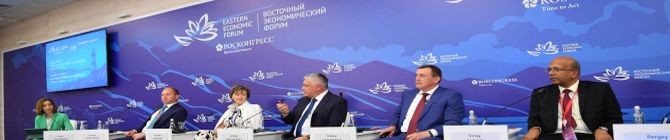
Representatives From Over 40 Nations Arrive In Vladivostok To Participate In Eastern Economic Forum (EEF-2024)

India's ambassador to Russia Amb. Vinay Kumar (extreme right) at EEF-2024

Vladivostok: The Eastern Economic Forum 2024 has kicked off in Vladivostok, where representatives from over 40 countries have arrived to participate in the forum.

The vent, which is organised by the Roscongress Foundation this year, has the theme of "Far East 2030. Combining Strengths to Create New Potential."

The Eastern Economic Forum 2024 (EEF-2024), notably, is taking place from September 3-6 on the campus of the Far Eastern Federal University. The forum has been held regularly since 2015.

In his greeting to the EEF participants, Russian President Vladimir Putin emphasised the role of this region in the future of Russia and the entire Asia-Pacific region.

"The role of the Asia-Pacific region in international affairs is growing rapidly. New opportunities are opening up here for productive cooperation, including within the framework of such authoritative multilateral structures as the EAEU, SCO and BRICS. I would like to reaffirm that Russia is open for dialogue with all interested partners in the Asia-Pacific," Putin said, according to TV BRICS news.

TV BRICS is a media partner of the Eastern Economic Forum.

According to the release by TV BRICS, it is expected that on September 5, the head of state will take part in the central event of the forum, the plenary session. Moreover, Putin is scheduled to meet with Malaysian Prime Minister Anwar Ibrahim, Chinese Vice-Chairman Han Zheng and Serbian Deputy Prime Minister Aleksander Vulin, who will also attend the plenary session.

The Russia-India Business Dialogue will also be held on the same day, where Editor-in-Chief of TV BRICS Ksenia Komissarova and Indian Ambassador to Moscow Vinay Kumar, as well as representatives of the business community of the two countries, will also deliver the address.

The main topics of the meeting will be the development of trade and transport links between Russia and India. The event will start at 10:00 local time (03:00 Moscow time).

According to Anton Kobyakov, Advisor to the President of Russia and executive secretary of the organising committee for the preparation and holding of the EEF, Vladivostok will host 4,200 delegates from more than 40 countries. According to TV BRICS News, they include politicians, diplomats, representatives of regional authorities, entrepreneurs and CEOs, journalists and members of the scientific community from Azerbaijan, Belarus, China, Cuba, Egypt, India, Japan, Malaysia, Myanmar, Serbia, the Philippines, Singapore, South Africa and Vietnam.

Moreover, the EEF business programme consists of thematic blocks related to the priority areas of the Far East's development: "People, Education and Patriotism," "New Contours of International Cooperation," "The Russian Far East," "Technologies to Ensure Independence," "Master Plans: from Architecture to Economy," "Transport and Logistics: New Routes," and "Financial Value System."

On the first day of the EEF, participants discussed the development of education and human capital, the prospects for trade and economic ties between Russia and China, the potential of external cultural ties between Russian regions, current demographic trends, the development of telemedicine and higher education, and attracting investment to the Arctic and the Far East, the TV BRICS release said.

It further added, noting that "a separate platform was dedicated to the role of the BRICS in the enlarged world arena."

In an exclusive commentary to TV BRICS, Egyptian participant Mohamed Salah, Chairman of the Eurasia and BRICS Forum as well as member of the advisory board of the World Forum of Tourism Experts, said it was important to integrate the new BRICS members into the system of relations within the association.

"The active role that the new members will play within BRICS, as well as the benefits they derive from joining, will increase the motivation of other states to become part of the association," the expert said.

A separate element of the first day's programme was the BRICS Creative Innovation Forum, where participants discussed the impact of advanced technologies on the development of creative industries, linguistics, and the preservation of cultural heritage.

In addition, an International Russian-Vietnamese Academic and Training Conference was held to mark the 75th anniversary of the establishment of diplomatic relations between Moscow and Hanoi.

Tran Tuan Anh, Vice President of the Vietnam Academy of Science and Technology, told TV BRICS about the role of cooperation between the two countries in the field of education science.

"The Russian side makes a significant contribution to training Vietnamese researchers. In addition, students from Vietnam receive training at universities and research centres in Russia. This cooperation contributes to joint development and technology transfer between our countries," the scientist said.

On September 4, the forum will discuss the role of BRICS+ countries in global trade, the development of production chains of the EAEU, SCO, and BRICS, and cooperation between the countries of the association in the field of pharmaceuticals.

Whereas on September 5, the forum will focus on the development of public-private partnerships and infrastructure projects in the BRICS+ area.

On the final day of the forum, delegates will discuss the prospects for cooperation between the BRICS countries in Arctic exploration, economic cooperation between Russia, India, and China in Eurasia, and intellectual property protection in the jurisdictions of the BRICS countries.

This report is auto-generated from a syndicated feed


Friday, August 30, 2024

Serbia Inks €2.7Bln Deal With France For 12 Rafale Fighter Jets


Serbia is formally seeking European Union membership, but under President Alexander Vučić's increasingly autocratic rule it has made little progress in the fields of rule of law and democratic reforms, which are the main preconditions for membership in the 27-nation bloc.

French President Emmanuel Macron has signed a deal with President Aleksandar Vučić to sell Serbia 12 Rafale fighter jets in a move that shifts Belgrade away from its dependence on Russian arms.

The announcement about the multi-purpose warplanes was made during a joint news conference in Belgrade, which Macron is visiting in an attempt to strengthen Serbia's ties with the European Union.

Macron called the deal "historic and important" and praised Serbia for its "demonstration of European spirit."

“Serbia's choice of Rafale fighter aircraft was a clear choice that represents a long-term alliance between our two countries, within a stronger, more sovereign Europe. This choice is part of our strategic autonomy and making it stronger," he said.

Serbia needs to upgrade its fleet and Vučić said the Rafale deal was "huge news".

"The contract was signed to include the complete logistical package including spare engines and other things. The contract is worth €2.7 billion. Twelve completely new aircraft will be owned by the Republic of Serbia," he said.

Russia has been the traditional supplier of military aircraft, including combat helicopters, to Serbia, which has refused to join international sanctions against Moscow for its invasion of Ukraine.

The rapid arming by the Serbian military has worried some of its neighbours following the bloody breakup of the former Yugoslavia in the 1990s. Serbia is almost completely surrounded by NATO member countries.

Selling Rafales to Russian ally Serbia, which has occasionally expressed an aggressive stance toward its Balkan neighbours, has raised some concerns, one of which is how France plans to prevent sophisticated Rafale technology from being shared with Russia.

(With Inputs From International Agencies)


Sunday, June 30, 2024

Crossbow Assailant Shot Dead After Attacking Policeman Guarding Israeli Embassy In Serbia


Belgrade: An attacker who fired a crossbow and wounded a police officer guarding the Israeli embassy in Belgrade has been shot dead in what the Serbian officials described as a "terrorist attack against Serbia", reported Al Jazeera.

Interior Minister Ivica Dacic said that the officer was in a guardhouse and the attacker approached him several times, asking for the location of a museum, adding that he carried a bag from which, at one point, he pulled out the crossbow and shot the guard.

The police officer was hit in the neck with the arrow, however, he fired several shots at the attacker who later "died as a result of his injuries".

The identity of the assailant is still being determined, Al Jazeera reported.

"This is a terrorist attack against Serbia," Dacic said, adding, "We are still talking about possible motives."

He further said that one person was arrested near the scene of the shooting.

Moreover, police are investigating a possible network and ties with "foreign terrorist groups", he added.

"There are indications that those are individuals already known to the security services," Dacic said.

The policeman underwent an operation to remove the arrow from his neck.

Notably, he was conscious when he was transported to Belgrade's main hospital for the operation, reported Al Jazeera.

According to the hospital officials, he is now in stable condition after the surgery.

Israel's embassy is located not far from the United States embassy in an upscale Belgrade district. It is guarded by an elite police unit with officers armed with automatic weapons, as reported by Al Jazeera.

Serbia has maintained close relations with Israel during its war on Gaza. However, Israel-linked institutions around the world have been on high alert for attacks and protests since Israel launched its invasion in October.

The Israeli foreign ministry, in a statement, said that the embassy in Belgrade remains closed and no employees were injured, adding that the "circumstances of the incident are being investigated".

Serbia's President Aleksandar Vucic visited the wounded officer in the hospital and vowed a sweeping crackdown on the attack, reported Al Jazeera.

"We are hunting them down. We will have no mercy for terrorism in Serbia," Vucic said.

Interior Minister Ivica Dacic said that later, several people believed to have been linked to the incident were also arrested.

"There are some indications they (those arrested) are already known to security services," he said.

Serbian Prime Minister Milos Vucevic strongly condemned what he labelled a "heinous terrorist act".

"This was an act of insanity, which cannot be attributed to any religion and any nation. It is a crime of an individual," he said, reported Al Jazeera, citing Beta news agency.

This report is auto-generated from a syndicated feed


Thursday, February 15, 2024

EU Proposes Curbs On Indian, Chinese Firms For Aiding Russia: Report


EU sanctions need the backing of all member states to be adopted and could change before then

The list includes firms in Hong Kong, Serbia, India and Turkey, some of which are also being targeted for the first time, as per report.

The European Union has proposed new trade restrictions on about two dozen firms, including three based in China, accused of supporting Russia's war efforts in Ukraine.

If adopted, it would be the first time the EU has imposed restrictions on companies in mainland China since Russia invaded Ukraine. The list includes firms in Hong Kong, Serbia, India and Turkey, some of which are also being targeted for the first time, according to a draft of the proposal seen by Bloomberg. The companies are not named for legal reasons.

The restrictions would ban European firms from trading with the listed firms as part of the bloc's efforts to crack down on Russia's ability to get its hands on sanctioned goods through companies in third countries. The EU had previously proposed listing several Chinese firms, but those proposals were dropped following resistance from some member states and after Beijing provided assurances.

The issue is of critical importance to the EU, which counts Beijing as one of its most important trade partners, and in particular for Germany, for whom China is the biggest market for carmakers including Volkswagen AG.

EU sanctions need the backing of all member states to be adopted and could change before then.

A spokesperson from the commission declined to comment on the proposal. A message left with China's embassy in Brussels wasn't immediately returned.

The mostly technology and electronics companies are accused of "contributing to Russia's military and technological enhancement or to the development of Russia's defence and security sector," according to the document.

Commission President Ursula von der Leyen traveled to Beijing in April and warned Chinese President Xi Jinping against getting involved in the war.

"We also count on China not to provide any military equipment, directly or indirectly, to Russia," von der Leyen said in Beijing. "Because we all know, arming the aggressor would be against international law. And it would significantly harm our relationship."

The proposals include three Chinese firms and one each from India, Sri Lanka, Serbia, Kazakhstan, Thailand, Turkey and Hong Kong. Their inclusion in the proposed list "does not entail any attribution of responsibility for their actions to the jurisdiction in which they are operating," the document says. The EU has so far listed more than 620 companies, with the near entirety from Russia.

The companies are mostly importing banned technologies and electronics and reexporting the goods to Russia.

As part of a package of sanctions to mark two years since Russia's invasion of Ukraine, the EU has also proposed sanctions on more than 110 people and entities.

This report is auto-generated from a syndicated feed


Friday, December 1, 2023

Serbian President Extends Invitation To PM Modi To Visit Country


Dubai: Serbian President Aleksandar Vucic on Friday extended an invitation to Prime Minister Narendra Modi to visit Serbia.

"I have just extended my invitation in an informal way to PM Modi and I hope we will be able to host him in Serbia as soon as possible," the Serbian President said.

Speaking on India-Serbia relations, Vucic said: "We have a very good relationship. I visited India and went to Gujarat."

He further said: "I spoke to PM Modi several years ago. In the meantime, we had visits by the President and Vice President of India to Serbia and we are developing our relationship in a very good way."

The remarks by Vucic came during his visit to the UAE to attend the World Climate Action Summit of the Conference of Parties-28.

COP28 will provide an opportunity to review progress made under the Paris Agreement and chart a path for future courses on climate action.

Meanwhile, President Droupadi Murmu recently said India and Serbia have always shared an understanding of each other's core interests.

The President was addressing the Indian diaspora in the Serbian capital, Belgrade.

The President interacted with the diaspora and friends of India at a community reception hosted by the Ambassador of India to Serbia, Sanjiv Kohli, in Belgrade.

Addressing the gathering, the President said that India and Serbia are ancient lands. In the modern era, India's relations with Serbia were particularly defined in the context of the Non-Aligned Movement, she noted, adding that India and Serbia have always shared an understanding of each other's core interests.

She added that based on this bilateral foundation, she would look forward to interacting with the Serbian leadership during her visit, the office of the President of India said in a release.

Expressing her gratitude to the friends of India in Serbia and the love and adulation that she has received, the President underlined that their contribution to building friendship and understanding between Serbia and India is crucial.

Pointing out India's role as a first responder, a voice of the global south and a responsible development partner, President Murmu said Serbia has been a valuable partner in India's sustainable development cooperation programmes.

"Each of these aspects reflects our quest towards becoming a leading power," she added.


Monday, June 12, 2023

Shubhdarshini Tripathi Is Next Ambassador of India To Serbia


New Delhi: The Ministry of External Affairs on Monday appointed Shubhdarshini Tripathi as the next Ambassador of India to Serbia.

Earlier, Tripathi was serving as Ambassador of India to the Republic of Kazakhstan. She is an Indian Foreign Service officer from the 1994 batch.

The Ministry of External Affairs informed in a press release, "Shubhdarshini Tripathi (IFS: 1994) presently Ambassador of India to the Republic of Kazakhstan, has been appointed as the next Ambassador of India to the Republic of Serbia."

She is expected to take up the assignment shortly, MEA added.


Saturday, June 10, 2023

President Droupadi Murmu Receives Grand Welcome After Successful Two-Nation Tour


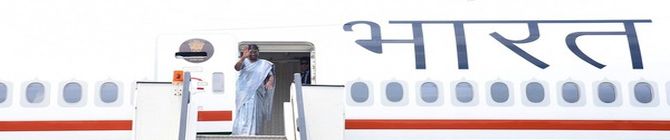
New Delhi: President Droupadi Murmu on Friday arrived in Delhi after concluding a successful six-day tour to Suriname and Serbia.

The President was given a grand welcome at Delhi's Palam Airport by Union Minister Kiren Rijiju and Minister of State for Health Bharti Pawar.

She was welcomed with a Shawl, traditional headgear and a statue of Birsa Munda.

President Murmu visited Suriname and Serbia from June 4 to 9. This was her maiden visit to Suriname, at the invitation of Suriname President Chandrikapersad Santokhi, and also her first state visit since assuming office in July 2022. Murmu also received an invitation from Serbian President Aleksander Vucic to visit his country.

"When our President goes to a foreign country and is honoured with the biggest state award, the whole country feels proud. It is something to be proud of. Suriname or Serbia, the way our President was given honour and respect, the whole nation is proud, " Minister Kiren Rijiju said while speaking to ANI.

President Droupadi Murmu was conferred with the highest civilian award of Suriname -- Grand Order of the Chain of the Yellow Star.

"Congratulations to Rashtrapati Ji on being conferred the highest civilian award of Suriname - Grand Order of the Chain of the Yellow Star. This special gesture from the Government and people of Suriname symbolizes the enduring friendship between our countries", the Prime Minister said in a tweet.

"President Droupadi Murmu @rashtrapatibhvn successfully concludes her visit to Suriname & Serbia. The visit has set new milestones in India's ties with the two countries," tweeted MEA Spokesperson Arindam Bagchi on Friday.

President Droupadi Murmu and Serbian counterpart Aleksandar Vucic on Thursday agreed to set a target for bilateral trade from the present 32 crore Euros to one billion euros by the end of the decade, the Ministry of External Affairs said.

During the business event, both leaders agreed to set a target for bilateral trade from the present 32 crores to a billion euros by the end of the decade, Ministry of External Affairs Secretary-West Sanjay Verma said in a media briefing.

MEA Secretary said President Droupadi Murmu had a packed day of official engagements, which started with a guard of honour at the Serbia Palace, followed by restricted-level talks, delegation-level talks, a joint address to the media and a business event.

"During the interactions on Thursday morning, both presidents reiterated old commitments and resolved to explore new areas of cooperation for further strengthening bilateral relations," MEA Secretary West Sanjay Verma said.

The Speaker of the National Assembly of Serbia, Dr Vladimir Orlic, also called on President Murmu.

Later, President Droupadi Murmu laid a wreath on the memorial of the unknown warrior atop Mountain Avala in Belgrade.

During delegation-level talks, President Vucic was joined by the Ministers of Defense, Agriculture, Culture, Health, mining and Energy, construction, transport and infrastructure, trade and tourism, and youth, which means eight members of the Cabinet were present today for the delegation-level talks. Each participating minister was briefed about the potential in their respective sectors, Sanjay added.

At the outset, President Vucic expressed his condolences for the loss of lives in the triple train accident in Odisha. During the bilateral interactions, both leaders reiterated their principle stand on the rule of law, respect for sovereignty and territorial integrity of nations. President Butcheck described Serbia's relationship with India as a fraternity.

He termed India as a time-tested, friendly country and told the Indian president to consider Serbia as a second motherland.

President Vucic identified six major areas of cooperation. "These included defence and military tech cooperation pharmaceuticals, agriculture, industrial cooperation, information technology, AI cultural cooperation, including film production and cemetery graphics".

Both sides discussed "cooperation in the field of culture, particularly in cinema films, and tourism came up repeatedly". Serbia sees the potential of attracting Indian filmmakers for shooting post-production and during the visit, there is a high-profile Indian film crew shooting in this country.

Murmu reached Suriname on June 4 and towards the end of her visit, she said that a mini India resides in Suriname and highlighted the significant contributions made by Indians in various aspects of Suriname's development, including the economy, society, and culture.

Prime Minister Narendra Modi congratulated her on the honour saying that this special gesture from the government and the people of Suriname symbolizes the enduring friendship between the two countries.

During her visit, she also met people of Indian origin living in Suriname at a community reception which was also attended by Suriname President Chandikaprasad Santokhi.

Addressing the people present on the occasion, President Draupadi Murmu said, "It is a matter of pride for us that Indians have reached the highest positions in Suriname."

"My first state visit after assuming office is to Suriname. It is a privilege for me to be part of the celebration of 150 years of the arrival of Indians in Suriname. It is a matter of pride for us that Indians have reached the highest positions in Suriname. Indians have been contributing significantly to the development of Suriname economically, socially and culturally," President Murmu said.

She further said the Centre's policy is to build permanent relations with all its friendly countries.

"Today India is moving fast towards development, India has always been ahead in helping its friendly countries regarding vaccines and medicines," she added.

Suriname President Chandrikapersad Santoki, while addressing the event, said that Suriname will further strengthen the 47 years of relationship with India.

"We are celebrating 150 years of Indian coming to Suriname, we are overwhelmed to wholeheartedly welcome the President of India on this occasion. We will further strengthen the 47 years of relationship between Suriname and India, and will further strengthen cultural and social-religious ties. Despite the distance of thousands of kilometres, a mini India resides in Suriname. Our relations have become stronger after Draupadi Murmu ji's visit. I say thanks on behalf of the people of Suriname," he said.

Earlier, President Murmu paid floral tributes at Mahatma Gandhi's statue along with her Suriname counterpart Chandrikapersad Santokhi in Knuffelsgracht of capital Paramaribo on Tuesday.

"Remembering the lasting legacy of Mahatma. President Droupadi Murmu @rashtrapatibhvn & President @CSantokhi of Suriname paid tributes to Mahatma Gandhi in Paramaribo," Ministry of External Affairs spokesperson Arindam Bagchi tweeted.


Friday, June 9, 2023

President Droupadi Murmu Successfully Concludes Suriname, Serbia Visits


Belgrade: President Droupadi Murmu on Friday successfully concluded her two-nation visits to Suriname and Serbia, the Ministry of External Affairs informed in a statement.

President Murmu visited Suriname and Serbia from June 4 to 9. This was her maiden visit to Suriname, at the invitation of Suriname President Chandrikapersad Santokhi, and also her first state visit since assuming office in July 2022. Murmu also received an invitation from Serbian President Aleksander Vucic to visit his country.

"President Droupadi Murmu @rashtrapatibhvn successfully concludes her visit to Suriname & Serbia. The visit has set new milestones in India's ties with the two countries," tweeted MEA Spokesperson Arindam Bagchi on Friday.

President Droupadi Murmu and Serbian counterpart Aleksandar Vucic on Thursday agreed to set a target for bilateral trade from the present 32 crore Euros to one billion euros by the end of the decade, the Ministry of External Affairs said.

During the business event, both leaders agreed to set a target for bilateral trade from the present 32 crores to a billion euros by the end of the decade, Ministry of External Affairs Secretary-West Sanjay Verma said in a media briefing.

MEA Secretary said President Droupadi Murmu had a packed day of official engagements, which started with a guard of honour at the Serbia Palace, followed by restricted-level talks, delegation-level talks, a joint address to the media and a business event.

"During the interactions on Thursday morning, both presidents reiterated old commitments and resolved to explore new areas of cooperation for further strengthening bilateral relations," MEA Secretary West Sanjay Verma said.

The Speaker of the National Assembly of Serbia, Dr Vladimir Orlic, also called on President Murmu.

Later, President Droupadi Murmu laid a wreath on the memorial of the unknown warrior atop Mountain Avala in Belgrade.

During delegation-level talks, President Vucic was joined by the Ministers of Defense, Agriculture, Culture, Health, mining and energy, construction, transport and infrastructure, trade and tourism, and youth, which means eight members of the Cabinet were present today for the delegation-level talks. Each participating minister was briefed about the potential in their respective sectors, Sanjay added.

At the outset, President Vucic expressed his condolences for the loss of lives in the triple train accident in Odisha. During the bilateral interactions, both leaders reiterated their principle stand on the rule of law, respect for sovereignty and territorial integrity of nations. President Butcheck described Serbia's relationship with India as a fraternity.

He termed India as a time-tested, friendly country and told the Indian president to consider Serbia as a second motherland.

President Vucic identified six major areas of cooperation. "These included defence and military tech cooperation pharmaceuticals, agriculture, industrial cooperation, information technology, AI cultural cooperation, including film production and cemetery graphics".

Both sides discussed "cooperation in the field of culture, particularly in cinema films, and tourism came up repeatedly". Serbia sees the potential of attracting Indian filmmakers for shooting post-production and during the visit, there is a high-profile Indian film crew shooting in this country.

Murmu reached Suriname on June 4 and towards the end of her visit, she said that a mini India resides in Suriname and highlighted the significant contributions made by Indians in various aspects of Suriname's development, including the economy, society, and culture.

President Droupadi Murmu was also conferred with the highest civilian award of Suriname -- Grand Order of the Chain of the Yellow Star.

Prime Minister Narendra Modi congratulated her on the honour saying that this special gesture from the government and the people of Suriname symbolizes the enduring friendship between the two countries.

"Congratulations to Rashtrapati Ji on being conferred the highest civilian award of Suriname - Grand Order of the Chain of the Yellow Star. This special gesture from the Government and people of Suriname symbolizes the enduring friendship between our countries", the Prime Minister said in a tweet.

During her visit, she also met people of Indian origin living in Suriname at a community reception which was also attended by Suriname President Chandikaprasad Santokhi.

Addressing the people present on the occasion, President Draupadi Murmu said, "It is a matter of pride for us that Indians have reached the highest positions in Suriname."

"My first state visit after assuming office is to Suriname. It is a privilege for me to be part of the celebration of 150 years of the arrival of Indians in Suriname. It is a matter of pride for us that Indians have reached the highest positions in Suriname. Indians have been contributing significantly to the development of Suriname economically, socially and culturally," President Murmu said.

She further said the Centre's policy is to build permanent relations with all its friendly countries.

"Today India is moving fast towards development, India has always been ahead in helping its friendly countries regarding vaccines and medicines," she added.

Suriname President Chandrikapersad Santoki, while addressing the event, said that Suriname will further strengthen the 47 years of relationship with India.

"We are celebrating 150 years of Indian coming to Suriname, we are overwhelmed to wholeheartedly welcome the President of India on this occasion. We will further strengthen the 47 years of relationship between Suriname and India, and will further strengthen cultural and social-religious ties. Despite the distance of thousands of kilometres, a mini India resides in Suriname. Our relations have become stronger after Draupadi Murmu ji's visit. I say thanks on behalf of the people of Suriname," he said.

Earlier, President Murmu paid floral tributes at Mahatma Gandhi's statue along with her Suriname counterpart Chandrikapersad Santokhi in Knuffelsgracht of capital Paramaribo on Tuesday.

"Remembering the lasting legacy of Mahatma. President Droupadi Murmu @rashtrapatibhvn & President @CSantokhi of Suriname paid tributes to Mahatma Gandhi in Paramaribo," Ministry of External Affairs spokesperson Arindam Bagchi tweeted.


'Hope Direct Flight Services Start Soon Between Serbia And India...': Serbian President


Belgrade: Lauding the ties between Serbia and India since 1948, President Aleksandar Vucic expressed his hope on Thursday that direct flight services would soon commence between the two countries that will greatly benefit business and tourism.

"After my visit to India and meeting with Prime Minister Narendra Modi, we talked about working in various fields and furthering our business relations. We are trying to start direct flights between India and Serbia as soon as possible. I hope that soon direct flight service will start between Serbia and India. This will help a lot in terms of business and tourism in both countries," Serbian President Aleksandar Vucic said while addressing a joint statement with Indian President Droupadi Murmu.

President of Serbia Aleksandar Vucic said, "There is a strong relationship between the two countries since 1948. International law and the United Nations Charter have always been respected, for which I express respect," he added.

He said that both countries have always respected each other for better business relations.

"I hope that businessmen and tourists from India will also want to visit Serbia. Similarly, the people of Serbia would also like to be aware of the glorious history of India and its vastness. To promote tourism, we are talking about visa simplification, as well as the Foreign Minister of Serbia is also trying for visa simplification, and definitely, both countries will definitely get benefit from it," he added.

Listing out the sectors in which both countries can cooperate, he said, "But we are working in many areas, like defence equipment, and we can cooperate a lot."

Speaking on various areas, he said, "India has also supported us in pharmacy, very high-quality medicines are made in India. We are also taking Tata's cooperation. We are looking forward to the possibilities of investment in making electrical appliances, and cinematography. A lot of work is going on in startups in India in IT, and we will welcome Indian partners. We can do good business with Raspberry and Apple.".

Regarding the meeting with President Droupadi Murmu, he said, "Today we have held talks on six important sectors. On which we can work a lot. India's private sector can also help us."

"President Droupadi Murmu's visit will further strengthen our relations," he concluded.

President Droupadi Murmu reached Belgrade, Serbia, earlier on Wednesday, in the final leg of her two-nation visit to Suriname and Serbia.

The ongoing visit by President Murmu marks the first such visit by an Indian head of state to Serbia. In a special gesture, she was received by the Serbian President Aleksandar Vucic, and accorded a guard of honour at the Nikola Tesla Airport in Belgrade.

From the airport, the President travelled to Gandijeva Street where he paid his respects at the bust of Mahatma Gandhi.

She also interacted with the diaspora and friends of India at a Community Reception hosted by the Ambassador of India to Serbia, Sanjiv Kohli, in Belgrade on Wednesday.


'India, Serbia Set Target For One Billion Euros Bilateral Trade Target Before Decade Ends: MEA


Belgrade: President Droupadi Murmu and Serbian counterpart Aleksandar Vucic on Thursday agreed to set a target for bilateral trade from the present 32 crore Euros to one billion euros by the end of the decade, Ministry of External Affairs said on Thursday.

During the business event, both leaders agreed to set a target for bilateral trade from the present 32 crores to a billion euros by the end of the decade, Ministry of External Affairs Secretary-West Sanjay Verma said in a media briefing.

MEA Secretary said that President Droupadi Murmu had a packed day of official engagements, which started with a guard of honour at the Serbia Palace, followed by restricted-level talks, delegation-level talks, a joint address to the media and a business event.

"During the interactions on Thursday morning, both presidents reiterated old commitments and resolved to explore new areas of cooperation for further strengthening bilateral relations," MEA Secretary West Sanjay Verma said.

There was also a call on by the Speaker of the National Assembly of Serbia, Dr Vladimir Orlic Honor President.

After that, President Droupadi Murmu laid a wreath on the memorial of the unknown Warrior atop Mountain Avala in Belgrade, Serbia

During delegation-level talks, President Vucic was joined by the Ministers of Defense, Agriculture, Culture, Health, mining and energy, construction, transport and infrastructure, trade and tourism, and youth, which means eight members of the Cabinet were present today for the delegation-level talks. Each participating minister was briefed about the potential in their respective sectors, Sanjay added.

At the outset, President Vucic expressed his condolences for the loss of lives in the tragic train accident in Odisha. During the bilateral interactions, both leaders reiterated their principle stand on the rule of law, respect for sovereignty and territorial integrity of nations. President Butcheck described Serbia's relationship with India as a fraternity.

He termed India as a time-tested, friendly country and told the Indian president to consider Serbia as a second motherland.

President Vucic identified six major areas of cooperation. "These included defence and military tech cooperation pharmaceuticals, agriculture, industrial cooperation, information technology, AI cultural cooperation, including film production and cemetery graphics".

Both sides discussed "cooperation in the field of culture, particularly in cinema films, and tourism came up repeatedly". Serbia sees the potential of attracting Indian filmmakers for shooting post-production and during the visit, there is a high-profile Indian film crew shooting in this country.

"Well-appreciated discussions continued on the positive advantages of collaborating in the space of cinema because of its relationship with tourism and also building business relations as countries get familiar with each other," he said..

Serbia has also offered very attractive concessions for filming in Serbia.

For instance, about 20 to 25 per cent cashback facility is given by the Serbian government to film units shooting in this country. President Vucic also emphasized that it was his desire to establish direct air linkages between Belgrade and Delhi.

On the matters of operationing direct flight between India and Serbia, he said, "Describing his own personal experience as a youth, he appreciated the sincerity and work ethos of Indians on direct connectivity. President Vucic mentioned several concessions or subsidies that Serbia was willing to offer to Indian Airlines if they operated a direct flight between India and Serbia."

President Murmu assured President Vucic that the Indian Airlines private alliance would be informed about these facilities and concessions that Serbia was offering to India's private civilization sector.

Recalling his visit to India in 2017, as then the Prime Minister of Serbia, President Vucic appreciated personal commitment and leadership for further sending India-Serbia relations. President Murmu also thanked the Serbian government for issuing a special postal stamp commemorating 75 years of India's independence.

Adding to the list of President Vucic, she highlighted the unprecedented change that India is going through and called for cooperation in new areas like science and technology, machinery, equipment, startups, and clean and renewable energy.

President also identified skilled and semiskilled manpower from India as having the potential to fill a vital gap in human resources in Serbia.

The spiritual heritage of India as well as yoga and Ayurveda also came up repeatedly in the conversation. Because these Indian contributions, both yoga and ayurveda, are popular in Serbia and do not require an introduction, both presidents after that addressed the media jointly.

On arrival, President Murmi was accorded a ceremonial welcome and a guard of honour at the airport. She paid floral tributes at the bust of Mahatma Gandhi in Belgrade.

On arrival later in the afternoon, she addressed a gathering of the Indian diaspora and Friends of India. She underlined that both India and Serbia are ancient lands and the relationship has been defined in the context of the nonaligned movement.

In recent years, both sides have shared an understanding of each other's core interests. Serbia has been a valuable partner in India's sustainable development program. As India emerges as a leading power, her role will enhance an issue related on issues related to climate change, counterterrorism connectivity, maritime security, financial inclusion, and food and energy security.

President appreciated and admired the contribution of the diaspora and Friends of India and underscored their positive contribution towards strengthening India.

And on the other hand, the Indian community is at its incipient state here, and in the coming few years we will find more Indian professionals here students, entrepreneurs, et cetera.


Thursday, June 8, 2023

President Murmu, Serbian Counterpart Vucic Agree To Strengthen Cooperation In UN, Hold Delegation-Level Talks


Belgrade: Apart from underlining the large potential for trade and investment, India and Serbia agreed to strengthen coordination and cooperation in the United Nations and other multilateral forums.

Addressing a press briefing in Serbia, President Droupadi Murmu said that she and her Serbian counterpart Aleksandar Vucic discussed important aspects of bilateral relationships and global and regional issues of common interest.

"We agreed to strengthen our coordination and cooperation in the United Nations and other multilateral fora," read the Press Statement of President Droupadi Murmu.

Recently, the UN General Assembly president has said the UN Security Council (UNSC) has become "paralysed" and "dysfunctional" in its "present form."

The UNSC was last reformed in 1965 when it increased its nonpermanent members from 11 to 15 and increased the necessary votes for the adoption of resolutions from 7 to 9.

At the 2005 World Summit, all Heads of States and Governments unanimously pledged themselves to an agenda for early and meaningful reform of the United Nations.

India is of the view that the international community needs to make more determined efforts to revitalize the General Assembly to enable it to fulfill its rightful role as the principal deliberative organ of the United Nations.

It is India's belief that no reform of the United Nations is complete without the composition of the Security Council changing to reflect the contemporary realities of the twenty-first century. This requires expansion in the membership of the Security Council in both the permanent and non-permanent categories.

India is a member of the G4 [India, Brazil, Japan and Germany] and the L - 69, the grouping of developing countries from Asia, Africa and Latin America that have been at the forefront of inter-governmental negotiations on the reform of the Security Council since 2009, India has relentlessly pursued this cause.

The Indian delegation has affirmed that the process of bringing about UNSC reforms should not be seen as an exercise ad-infinitum and called for concrete outcomes on this subject at the earliest through the initiation of text-based negotiations.

Meanwhile, President Droupadi Murmu held delegation-level talks with President Aleksandar Vucic of Serbia and both Presidents discussed important aspects of the India-Serbia bilateral relationship.

"President Droupadi Murmu held delegation-level talks with President @avucic

of Serbia. Both the Presidents discussed important aspects of India-Serbia bilateral relationship and global and regional issues of common interest," the official handle of Rashtrapati Bhavan tweeted.

Calling the relations between India and Serbia during the presser, "unique" since the days of the Non-Alignment Movement, the President said that the relationship between both countries is based on mutual trust, mutual understanding and support for each other on issues of core interest.

We remain committed to injecting more ambition into this vital relationship, the President added.

During the meeting, President Murmu and Serbian counterpart Vucic agreed to strengthen long-standing bilateral connections, particularly in trade and investment, research and technology (including information and digital technologies), and people-to-people interactions.

Furthermore, President Murmu also thanked President Aleksandar Vucic and the people of Serbia for the warm welcome and hospitality.

"I am delighted to visit Serbia, my first State Visit to any European country. I thank President Aleksandar Vucic and the people of Serbia for the warm welcome and hospitality extended to me and my delegation," she said.

On this occasion, I recall the visit of President Vucic to India in 2017, as the then Prime Minister of Serbia. His visit set the tone for further expansion of our bilateral partnership, President Murmu added, according to the official press statement.

President Droupadi Murmu reached Belgrade, Serbia, earlier on Wednesday, in the final leg of her two-nation visit to Suriname and Serbia.

The ongoing visit by President Murmu marks the first such visit by an Indian head of state to Serbia. In a special gesture, she was received by the Serbian President Aleksandar Vucic, and accorded a guard of honour at the Nikola Tesla Airport in Belgrade.

From the airport, the President travelled to Gandijeva Street where he paid his respects at the bust of Mahatma Gandhi.

She also interacted with the diaspora and friends of India at a Community Reception hosted by the Ambassador of India to Serbia, Sanjiv Kohli, in Belgrade on Wednesday.


President Murmu Highlights India-Serbia Trade And Investment Potential At Business Forum In Belgrade


Belgrade: Underlining the large potential for India-Serbia trade and investment, President Droupadi Murmu has urged to "take advantage" of the economic partnership between the two countries.

President Murmu, who is in Serbia in the last leg of her two-nation visit, was addressing the India-Serbia Business Forum in Belgrade on Thursday. Murmu was also called on by Serbian PM Ana Brnabic.

At the outset of her address, she thanked President Aleksander Vucic for making this event possible.

Murmu said, "India and Serbia have had close and friendly relations since the days of the Non-Aligned Movement. It is now time to build on this, and strengthen our trade and economic partnership."

She also highlighted the growing Indian economy saying that it continues to perform well and is one of the fastest-growing major economies in the world. "It is the fifth-largest economy and is on its way to becoming the third-largest before the end of this decade. We have seen significant success in the auto and auto-components sector, health care, pharmaceuticals and biotechnology, renewable energy, textiles & apparel, space, information technology, telecom, fintech, and financial services," Murmu added.

The President then spoke on the growing digital capability of India with IT parks and electronic cities mushrooming across the country.

Murmu said, "This rapid growth in digital infrastructure has put India at the forefront in terms of technological innovation. Be it the availability of day-to-day services through mobile and online platforms or cashless transactions, India continues to achieve digital transformation in every field."

She added that India has the third largest start-up ecosystem in the world, with over 100 unicorns. In 2022, the total FDI inflow into India was around USD 77 billion.

Murmu also expressed happiness about the Serbian economy recovering from the Covid pandemic and its external trade of goods rising by 17 per cent in 2002.

"I am told that Serbia has also attracted more than half of the FDI received by the Western Balkans region since 2018. Road and rail investments are also taking place at a healthy pace, to integrate Serbia into wider European networks. Yours is a country of intelligent, hard-working people driven by innovation and ideas. Serbia can become an effective gateway for Indian companies to access broader markets in Europe and Eurasia," she further said.

The President said that she was also aware that Serbia is looking for hard-working and skilled workers and professionals from overseas, to help meet its workforce requirements.

Earlier in the day, Murmu met her Serbian counterpart. In the meeting, the two agreed to deepen the India-Serbia partnership in all spheres, including economic and business ties. "The entrepreneurs present in this room today can become the driving force of dynamism between our two countries," Murmu said.

She concluded her address by expressing confidence in India-Serbia trade growing by at least USD 1 billion even though bilateral trade between India and Serbia is at present modest at around 320 million.