Showing posts with label Tibet. Show all posts

Thursday, August 7, 2025

New Dam Project May Weaponize Water Flow To China's Advantage: Report


The Yarlung Zangbo dam project by China, which will surpass the Three Gorges Dam with a capacity of around 70 gigawatts, is a massive hydropower endeavour located in Tibet on the upper Brahmaputra river.

This project has raised significant geopolitical concerns because it gives China strategic control over the river water that flows downstream into India and Bangladesh, affecting millions of people who rely on the river for agriculture, drinking water, and livelihoods.

China's upstream position allows it to potentially weaponize the water flow, manipulating the timing and volume of water released to exert pressure or gain political leverage over downstream countries. 

This capability is especially sensitive given the already heightened tensions in the region. Experts fear China could create droughts or floods downstream by regulating the dam’s discharge, a form of water diplomacy or coercion that could dramatically impact India's north-eastern states like Arunachal Pradesh, Assam, and further into Bangladesh.

India is responding defensively with its own Siang Upper Multipurpose Project (an 11,000 MW dam in Arunachal Pradesh), but this project faces environmental concerns and local resistance, constraining India’s ability to counterbalance China’s upstream advantage fully.

Due to the fundamental asymmetry—with China hydrologically upstream and authoritarian in decision-making, and India downstream facing democratic constraints—Beijing retains significant strategic advantage regardless of India’s measures.

China claims the project is part of its renewable energy transition and carbon-neutral goals by 2060 and insists it has engaged in hydrological monitoring cooperation with downstream countries for flood prevention and mitigation.

However, transparency is limited, and the lack of a comprehensive water-sharing agreement between China and India exacerbates mistrust.

The scale of Chinese hydropower development in Tibet is immense: since 2000, nearly 193 projects have been built or authorized, with many still in planning. These large-scale projects threaten to displace over 1.2 million residents and disrupt sacred sites.

The Yarlung Zangbo dam stands as a symbol of both China's infrastructural power and its readiness to use water resources as geopolitical tools in South Asia.

The Yarlung Zangbo dam project emphasizes China's strategic intent to harness water resources as leverage in regional diplomacy, intensifying water security concerns for downstream countries like India and Bangladesh and marking a significant moment in the geopolitics of South Asian water resources.

Based On ANI Report


Monday, July 14, 2025

Dalai Lama Hails India As The Global Epicentre For Buddhist Study Amidst Restrictions In China


During his recent visit to Ladakh, the Dalai Lama strongly reaffirmed India’s unparalleled position as the world’s foremost center for authentic Buddhist study and practice.

The visit, marked by a warm reception from Ladakhis, Tibetans, and other local communities, became a platform for the Dalai Lama to highlight the profound importance of India in preserving and nurturing Buddhist traditions—especially against the backdrop of increasing restrictions and politicisation of Buddhism in China.

Reflecting on the traumatic events of 1959 that led to his exile from Tibet, the Dalai Lama expressed deep gratitude for the immense support and assistance extended by the Government of India to Tibetan refugees.

This support, he noted, has been instrumental in reviving monastic universities and re-establishing the rigorous scholarly debate and study that are the hallmarks of Tibetan Buddhism. In India, these traditions have not only survived but flourished, thanks to the country’s democratic freedoms and respect for religious diversity.

The Dalai Lama drew a sharp contrast between India’s open, intellectually vibrant environment and the situation in China, where religious freedom is severely curtailed and political control undermines genuine spiritual teaching. He lamented the decline of Buddhist traditions in Tibet, attributing it to the destruction of monastic institutions and the suppression of religious practice by Chinese authorities. In China, he observed, the promotion of Buddhism is often superficial and politicised, stripped of its transformative spiritual depth and scholarly rigour.

In India, by contrast, Buddhist monastic centers continue to uphold the rich heritage of dialectical debate and philosophical inquiry, particularly in the study of the Middle Way (Madhyamaka) and Buddhist logic (Pramana) as taught in the ancient Nalanda tradition. Students in these institutions engage in active philosophical discussions that cultivate both insight and compassion, ensuring the continued vitality and authenticity of the Dharma.

The Dalai Lama also praised the Himalayan region’s shared language, culture, and Buddhist lineage with Tibet, underscoring the critical role of Indian institutions in upholding and spreading the authentic Dharma for the benefit of all sentient beings.

He emphasised that India’s centuries-old Buddhist educational traditions, combined with its ongoing support for Tibetan refugees and monastics, make it the unrivalled sanctuary and beacon for Buddhism’s future.

In conclusion, the Dalai Lama’s remarks in Ladakh not only celebrated India’s unique role in the global Buddhist community but also served as a pointed reminder of the challenges facing Buddhism under Chinese rule. With its democratic freedoms, vibrant intellectual traditions, and unwavering support for the preservation of Tibetan Buddhism, India stands as the ideal place for Buddhist study and spiritual growth, offering hope and inspiration to Buddhists worldwide.

Based On ANI Report


Monday, July 7, 2025

'India Needs To Act Prudently,' China Criticises PM Modi's Wishes For Dalai Lama's Birthday


China has formally protested against Indian Prime Minister Narendra Modi's public greetings to the Dalai Lama on his 90th birthday, as well as the participation of Indian government officials in the celebrations.

The Chinese government, through Foreign Ministry spokesperson Mao Ning, reiterated its longstanding position that the Dalai Lama is a "political exile" engaged in "anti-China separatist activities" and accused him of seeking to separate Tibet (referred to by China as "Xizang") from China under the guise of religion.

Mao Ning emphasised that India should be "fully cognizant of the sensitivity of issues related to Xizang," recognize what Beijing calls the "anti-China and separatist nature" of the Dalai Lama, and honour previous commitments made to China regarding Tibet.

She urged India to "act prudently" and to stop using Tibet-related issues to "interfere in China's internal affairs," confirming that China had lodged an official protest with New Delhi over both the Prime Minister's greetings and the presence of Indian officials, including Parliamentary Affairs Minister Kiren Rijiju, at the birthday event.

China further warned that any engagement by India with the Dalai Lama or commentary on issues such as the reincarnation of the Tibetan spiritual leader is viewed as interference in China's domestic matters. 

The Chinese Ambassador to India, Xu Feihong, reiterated that the reincarnation process of the Dalai Lama is an "internal affair of China" and that "no interference by any external forces will be allowed." He asserted that the conferment of religious status and titles within Tibetan Buddhism is the prerogative of the Chinese central government.

Meanwhile, the Tibetan community in exile marked the Dalai Lama's 90th birthday with traditional celebrations in India, highlighting the ongoing significance of the spiritual leader among his followers and the persistent diplomatic tensions his presence elicits between India and China.

Based On ANI Report


Wednesday, June 18, 2025

UN Rights Chief Criticises China For Abuses In Tibet And Xinjiang, Urging The Release of Detainees And Reforms To The Legal System


On June 17, 2025, Volker Türk, the United Nations High Commissioner for Human Rights, delivered a comprehensive address highlighting serious concerns about ongoing human rights violations in China, specifically in Tibet and Xinjiang.

Türk underscored the "continued violations of cultural and other rights" in Tibet and called for the immediate release of all individuals detained for exercising their rights. He urged China to align its legislation and policies with international human rights standards, emphasizing the need for substantial legal reform to ensure compliance with international law.

Türk noted that his office continues to receive troubling reports from Xinjiang, including cases of undue prison sentences, incommunicado detention, and broad restrictions on fundamental rights. In Hong Kong, he expressed deep concern over the persistent application of national security laws, which have contributed to a shrinking civic space and further limited freedoms.

Beyond China, Türk's address painted a broader picture of global instability, citing the intersection of escalating armed conflicts, climate change, economic volatility, and unchecked technological advancements as key factors exacerbating human rights crises worldwide.

He specifically mentioned the military escalation between Israel and Iran, calling for immediate de-escalation and diplomatic negotiations, while stressing the importance of adhering to international law and protecting civilians.

Türk reminded the Human Rights Council of the United Nations' foundational mission: to end war, reaffirm faith in fundamental human rights, and promote justice and international law. He acknowledged the progress achieved through international cooperation, such as improved life expectancy, better education, and stronger legal frameworks for human rights and disarmament, but warned that the current global trend of escalating conflict and disregard for international law is unacceptable.

He concluded with a powerful call to action, urging the international community to uphold international law, safeguard human rights, and resist the erosion of the United Nations' core principles. Türk's remarks serve as a stern reminder of the urgent need for global solidarity and accountability to protect the rights and dignity of all individuals, particularly those facing repression in regions like Tibet, Xinjiang, and Hong Kong.

Based On ANI Report


Wednesday, January 8, 2025

China In 2025: More Trouble Lies Ahead


China is entering 2025 amid a complex landscape of economic challenges and geopolitical tensions, particularly with the United States. Here are the key issues shaping China's trajectory this year:

Economic Challenges

Growth Concerns: China is focusing on sustaining economic growth, which is projected to be around 5% for 2025. This cautious target reflects ongoing struggles with weak consumer confidence, high youth unemployment, and a need for structural reforms. Analysts suggest that while fiscal support may increase, significant reforms are hindered by fears of welfare dependency and debt sustainability.

Domestic Consumption: To counteract economic headwinds, Beijing is pushing for increased domestic consumption. However, consumer confidence is likely to remain fragile due to persistent economic uncertainties.

Geopolitical Tensions

US-China Relations: The return of Donald Trump to the White House is expected to exacerbate tensions between the two nations. Trump has indicated plans for substantial tariffs on Chinese imports, which could lead to retaliatory measures from Beijing. The potential for a renewed trade war looms large, especially in sectors like electronics and textiles that are vital to China's economy.

AI And Technology Rivalry: The competition in AI technology will intensify, with both nations vying for supremacy. The Trump administration is anticipated to implement stricter export controls on technology, prompting China to seek alternative partnerships to bypass these restrictions.

Internal Politics

Consolidation of Power: President Xi Jinping is expected to further consolidate his authority as he approaches the midpoint of his third term. This consolidation may involve intensifying anti-corruption efforts and maintaining a strong central government to implement necessary economic policies.

India-China Relations Dynamics

On the regional front, China is attempting to reset its relationship with India after years of tension following border clashes. Recent discussions indicate a potential thaw in relations, driven by economic imperatives and mutual interests in stabilizing their border disputes.

2025 presents a challenging landscape for China, characterized by economic vulnerabilities, escalating geopolitical tensions with the US, and a critical need for internal political stability. How China navigates these multifaceted challenges will significantly influence its future trajectory on both domestic and international fronts.

ANI


Tuesday, January 7, 2025

India And Other South Asian Countries Should Stand Up Against China's Super Dam On Brahmaputra, Warns Expert


Concerns are mounting over China's plan to construct the world's largest dam on the Brahmaputra River, known as the Yarlung Tsangpo in Tibet. This $137 billion hydropower project, which aims to produce 300 billion kilowatt-hours of electricity annually, has raised alarms among downstream countries, particularly India and Bangladesh, regarding its potential impact on water flow and regional stability.

Experts have urged India and other South Asian nations to take a stand against this mega dam. Gyaltsen, an expert in the field, highlighted the seismic risks associated with such large-scale infrastructure in a geologically sensitive area. He noted that mega dams can induce seismic activity, posing additional threats to the stability of the region.

In response to China's announcement, India has reiterated its commitment to protecting its interests as a lower riparian state. The Indian Ministry of External Affairs has expressed concerns about the potential impacts on water flow and has called for transparency and consultation from China regarding this project. Indian officials have emphasized that they will continue to monitor developments closely and take necessary measures to safeguard their rights to the river's waters.

Environmental And Geopolitical Implications

The dam's construction is expected to have significant ecological consequences, potentially altering the river's course and affecting agriculture and biodiversity both in Tibet and downstream in India. Additionally, there are fears that China might leverage control over water resources during times of political tension, raising questions about regional security and cooperation on transboundary water management.

Conclusion

As China moves forward with this ambitious project, the need for collaboration among South Asian countries becomes increasingly critical. Experts argue that unified action is essential to address the challenges posed by China's upstream position on the Brahmaputra River, ensuring that the interests of all affected nations are considered and protected.

ANI


Tuesday, October 8, 2024

China's High-Altitude Heliports In Tibet A Sobering Reminder of Threat To India Along LAC

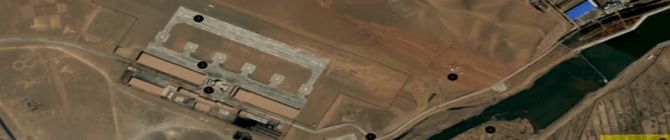
An under-construction heliport in Gar County

The military dynamics of Tibet are undergoing a fresh change with the construction of high-altitude helicopter infrastructure in the area

Prof (Dr) Y Nithiyanandam

The Tibetan Autonomous Region (TAR) presents unique challenges for air infrastructure superiority, with its high altitude and rugged terrain. While the expansion of airports and deployment of fighter jets and sophisticated radar systems have been traditional measures of this superiority, a less recognised but equally critical aspect is China's increasing rotary-wing capabilities at extreme altitudes.

Our research reveals that nearly 90% of heliports in the TAR are located at elevations between 3,300 and 5,300 m (10,000–17,400 ft), with 80% concentrated above 3,600 m. These advancements signal that China's once-significant limitations in helicopter operations at such altitudes are swiftly diminishing.

China's critical military infrastructure at higher altitudes is rapidly expanding in the challenging environment of the TAR. A vital part of this expansion is the proliferation of high-altitude heliports and helipads, which are quickly becoming crucial nodes in the People's Liberation Army (PLA) ground and air operations strategy.

These helipads, strategically placed near the Line of Actual Control (LAC) between India and China, disputed areas with Bhutan, and critical infrastructure like surface-to-missile (SAM) sites and military barracks, serve as logistics hubs. Their role in facilitating rapid troop and equipment movement underscores their strategic significance.

The figure above shows the distribution of 109 helipads based on their elevation. Surprisingly, only two helipads are positioned at an elevation of 780 to 2600 m. However, 32 helipads are located between 2700 and 3600 m, 44 helipads between 3700 and 4300 m, and 25 helipads between 4400 and 4700 m. Six more helipads are positioned at elevations between 4800 and 5400 m. These helipads exhibit a wide range of elevations, from a minimum of 780.50 m to a maximum of 5374 m, with an average elevation of approximately 3930 m.

Once considered to be a handicap in PLA's air operation, China's high-altitude capabilities have seen a significant and rapid expansion. This development underscores the urgency of the situation and the growth of the PLA's air operations in a way that cannot be ignored.

A new approach of extending heli strips to allow Unmanned Aerial Vehicles (UAVs) to land on strips shorter than 1,000 m highlights China's forward-thinking military infrastructure, making these sites useful for both helicopters and UAVs.

Over the past decade, the PLA has substantially invested in helicopter infrastructure, which has increased its operational capability. These expenses are not merely reactions to disputes like the 2017 Doklam standoff or the 2020 Galwan Valley clash. Instead, they are a calculated approach aimed at guaranteeing long-term gains in a zone where the topography and elevation seriously challenge the PLA's troops.

For example, the Z-20 and Z-8L helicopters have been specially built to operate under the difficult circumstances of the Tibetan plateau, highlighting China's will to overcome the obstacles presented by the hostile surroundings.

Modernising And Expanding: A Strategic Choice

While the rate of heliport construction is slower than the growth of airfields, it reflects the PLA's approach of aggressively expanding its military infrastructure. Some of the heliports studied in our research are undergoing infrastructure upgrades/expansion, while a few are newly established.

The figure above shows helipads/heliports and aerodromes located 5, 10, 25, 50, 100, and 200 km from the LAC. The spacing of these heliports highlights their strategic importance.

Heliport concentrations close to the LAC and other disputed regions highlight their importance in supporting ground operations and preserving a continuous military presence in disputed territory. Combining these heliports with other military installations, such as radar stations and Surface-to-Air Missile (SAM) sites, can create a dense network of military capabilities that can be rapidly mobilised in response to any border escalation.

These heliports' proximity to the Indian border allows the PLA to quickly deploy hop-on, hop-off forces in case of a confrontation, matching Indian defences in high-altitude locations with supply lines and logistics. Over the years, China may have a significant advantage over its neighbours if it keeps constructing such infrastructure at this rate. This underscores China's long-term approach to defending its territorial claims and establishing hegemony by incorporating these heliports in a more extensive military infrastructure network.

These advances will impact the strategic calculus in the Himalayan borderlands, serving as a sobering reminder of how the threat is changing for India along its northern front. As the PLA keeps improving its capacity in Tibet, India must react with similar steps to guarantee it is ready to handle the difficulties presented by China's growing military presence in the Himalayas.

Prof (Dr) Y Nithiyanandam heads the geospatial research program at the Takshashila Institution, Bangalore


Tuesday, September 3, 2024

Tibetans In-Exile Celebrate 64th Anniversary of Democracy Day In Dharamshala


Dharamshala: Tibetans-in-exile commemorated the 64th anniversary of 'Democracy Day' in Dharamshala, Himachal Pradesh on Monday and highlighted the significance of the day in establishing democracy for Tibetans.

The day marks the inception of the Tibetan democratic system in exile. On this day, the Tibetan parliament-in-exile was established in 1960 following the arrival of the Dalai Lama and 80,000 Tibetans in exile in Dharamshala.

While speaking to ANI, a resident of Dharamshala expressed his pleasure on the occasion and said the day is very special for Tibetan people.

"In 1960, Dalai Lama declared the democracy system, started some members of parliament from the different regions of Tibet and then set up the democracy parliament system. A huge number of people from the three regions and also five sectarians of Tibetan Buddhism in Tibet. Since that, we have got a democracy system, as gradually we have the increased members of parliament from different regions," he added.

He further added that now the Tibetans have a "full-fledged democratic system" as well as the 46th member of the parliament.

"Now we have the 46th member of the parliament. This is a fully democratic system. And the Dalai Lama has given, especially in 2011, that he has given full power to the Tibetan people and the electing there as president of the Tibetan people, the president of the exile and also from Tibet."

On September 2, 1960, a year after thousands of Tibetans were forced to flee their homes due to the 'Chinese invasion', the first elected representatives of the Tibetan Parliament-in-exile took their oaths in Bodh Gaya to inaugurate the Tibetan democratic system.

Last year also, Tibetans-in-exile celebrated the 63rd anniversary of Democracy Day in Dharamshala where leaders of the exiled Tibetan Government including Tibetan parliamentarians and other dignitaries gathered at the main Buddhist temple, Tsuglagkhang in the north Indian hill town Dharmashala.

A 13-member delegation including Swedish parliamentarians led by MP Margareta Elisabeth Cederfelt joined the occasion as distinguished guests.

The democratic system of government is based on a political ideology that does not differentiate people on the basis of the question whether a person is strong or weak, rich or poor, male or female, or on the basis of their race or lineage, and so forth with regard to their status in society. Rather, it postulates the founding of a society in which everyone is seen as equal, viewed through the prism of the generality or commonality of everyone, according to the Central Tibetan Administration.

This report is auto-generated from a syndicated feed


Wednesday, August 28, 2024

US Urges China To Start Negotiations With Dalai Lama Without Preconditions


Dharamshala: United States Embassy in New Delhi spokesperson Christopher Elms visited the exiled Tibetan community and urged China to start dialogue with Tibetan spiritual leader the Dalai Lama or his representatives without preconditions.

During this visit, Elms visited the Tibet Museum, Buddhist monasteries and offices of the Central Tibetan Administration and also met representatives of Indian and Tibetan media.

Speaking to ANI, Elms said, "The Resolve Act as you know was passed by the Congress in June this year and signed into Law by US President Joe Biden in July. I can't speak on behalf of Congress, but on behalf of the administration and on behalf of President Biden, he signed the Act into law because we agree with the sentiment of the law that is there to protect the human rights of the Tibetan people."

"The law also discusses Tibet as a political entity. It's been a long-standing policy of the United States and the President reiterated that the United States government still see the Tibet autonomous region and other Tibetan areas of China as a part of China, that does not change anything from our policy, that's something that President Biden does control how we determine what international borders are. However, I think the next steps are what we have been urging for a long time which is a direct negotiation between China and the Dalai Lama or his representatives," he added.

Further, Elms has called on China to engage in direct negotiations with the Dalai Lama or his representatives without preconditions.

"It's been 13 years since they have been these district negotiations and we encourage China to engage in negotiations directly with the Dalai Lama or his representatives without preconditions," US embassy spokesperson told ANI.

Christopher further said, "The Resolve Act describes the US' position and it's something that we are continuing to carry out our mission here in the US Embassy in New Delhi," adding that "We do that around the world as well."

"This has been something that a long-standing and we are continuing to do that and part of my visit is to understand how best US can support the Tibetan people. We continue to call for direct talks and we are open to create solutions. Our government talks with the Central Tibetan Administration and we would really like to see these talks directly without any preconditions as soon as possible," he said.

Tibetan spiritual leader the 14th Dalai Lama has just returned to his exile home in Dharamshala after a successful knee treatment in the US.

During Dalai Lama's recent visit to the US, he met with various US officials. Talking about the Dalai Lama's recent US visit, Elms said, "I can speak on his entire schedule and I know that he had a private schedule in the United States and while he was there he met with the special coordinator for Tibetan issues from US government, her name is Uzra Zeya as well as the senior director for national security council that covers democracy and human rights."

"They had that meeting on the 21st of August in New York and in that meeting, the special Tibetan coordinator Uzra Zeya reiterated the message from the US government that we support the human rights of the Tibetan people as well as the continued efforts to preserve the historical, cultural, linguistic, and religious heritage, that distinct the Tibetan people," he added.

"Uzra Zeya also conveyed a message from President Biden to Dalai Lama wishing him a swift recovery and continued good health after a knee surgery in the United States," Elms said.

Elms visited the exiled Tibetan community in Dharamshala from 26- 28 August.

This report is auto-generated from a syndicated feed


Dalai Lama Returns To Dharamshala After Knee Surgery In The US


Dharamshala: On Wednesday morning, the 14th Dalai Lama arrived at his exile home in Dharamshala, receiving a formal welcome at Kangra airport following a successful knee surgery in the United States. The procedure, conducted to address ongoing knee issues, was completed without complications, according to medical reports. His return signifies the end of his medical treatment abroad and the resumption of his activities.

The reception at Kangra airport was attended by a diverse group, including Tibetan expatriates and representatives from various religious communities. Notable figures present included Imam Mohd Kamil Jamie of Jamia Masjid Dharamshala, Reverend Victor Khijjee of St John Church in the Wilderness, and Kelsan Dolma, Vice President of the Tibetan Women's Association in Dharamshala.

This diverse turnout reflects the broad support base and respect the Dalai Lama commands across different communities.

During his visit to the US, the Dalai Lama engaged in a series of significant public events. He delivered a keynote address at the Global Compassion Summit in San Francisco, where he emphasized the urgent need for global compassion in addressing climate change and socio-economic inequalities.

Additionally, he participated in a panel discussion at Harvard University on ethical leadership and mental health, which drew attention from both academic and public circles.

The Dalai Lama also attended a special interfaith dialogue session at the United Nations Headquarters in New York, where he engaged with leaders from various religious traditions to discuss fostering peace and understanding among different cultures (UN News). These events underscored his commitment to addressing global challenges through dialogue and compassion.

Upon his return, the Dalai Lama expressed his appreciation for the medical care he received in the US and the reception he received upon returning to Dharamshala. The procedure has reportedly been effective in addressing his knee problems, and he is expected to continue his scheduled activities following a brief recovery period.

The event at Kangra airport highlights the significant public interest and support for the Dalai Lama, reflecting both his role as a spiritual leader and his impact on various communities globally.

This report is auto-generated from a syndicated feed


Sunday, July 21, 2024

Central Tibetan Administration To Draft Tibet's Map Amid China's Practice of Changing Territory Names


Dharamshala: The Central Tibetan Administration of the Tibetan government in exile, based in Dharamshala, is planning to draw up a map to counter China's tactics of changing the names of places and territories.

The Chinese have been renaming major places in Tibet with a clear strategy to gradually erode their identity. With new names being used the Chinese side believes the people will forget the old Tibet.

The Tibetan government in exile, however, has found a solution to this strategy of China. The Central Tibetan Administration of Tibetan government in-exile is planning to draw up a map of Tibet with the Tibetan names based on historical records to counter China's aggression.

President of the Central Tibetan Administration of the Tibetan government-in-exile, Penpa Tsering Sikyong, said, "We are preparing to draw up a map with the Tibetan names and it is yet to begin, it's still in the drawing room. It will take may be six months to one year to develop this."

Tibetan activists have also appreciated this strategy. President of the Tibetan Youth Congress, Gompo Dhondup, highlighted that for many years, the Chinese government tried to fool the global community with their propaganda.

"For many years, the Chinese government has tried to misinterpret history, they try to fool the global community with their propaganda but this is a high time for us to counter the Chinese propaganda and to fight for truth and justice. For those reasons, the Central Tibetan Administration is planning to come up with a new map to counter the Chinese baseless claim and their aggressive tactics in renaming different places and territories in all the Himalayan borders so I appreciate this move and hopefully that will be a very strong message to counter the Chinese aggression in all the Himalayan regions," Dhondup said.

Tibet's cartographic history begins with Tibet's map, published by Western countries in the 17th and 18th centuries based on information obtained from Jesuit missionaries and traveller's accounts.

The mapping of Tibet according first published by the British and the Chinese, until the Shimla Convention of 1914, during which the Gaden Phodrang government, for the first time, made an effort to participate in the demarcation of Tibetan territories.

However, after the establishment of the Tibetan exile administration, various institutions and individuals made numerous attempts to standardise the Tibetan map. Names of places and geographical feature names are an important part of the Tibetan cultural environment.

The recent passing of the Resolve Tibet Act by the US Congress has also ignited hope for the Tibetan freedom movement. The Tibetans say that China cannot just change history and erase a civilization.

This report is auto-generated from a syndicated feed


Friday, July 19, 2024

'We Consider Ourselves Extension of Indian Culture,' Says Tibetan Leader In Exile


New Delhi: Penpa Tsering, the President of the Tibetan Government-in-Exile, appreciated India's support for Tibetan culture and highlighted their strong cultural connection with New Delhi, adding that Tibetans consider themselves an extension of Indian culture, language and religion.

Tsering further noted that Tibetan language and religion are based on Indian scripts and have translated many Sanskrit and Pali texts into Tibetan, preserving ancient Indian wisdom.

"We consider ourselves as an extension of Indian culture, language or religion. The script of our language and religion all came from India. We consider ourselves as an extension of Indian culture because wetranslated every available Sanskrit and Pali text into Tibetan and we are the only country to do that. So, we are the repository of one part of ancient Indian wisdom," Penpa Tsering said.

Further, he also acknowledged India's role in providing refuge to the Dalai Lama and 72,000 Tibetan people when China annexed Tibet in 1951.

"We are very grateful to the Indian government at the most difficult period of our history, to give refuge here in India to His Holiness and now there are 72,000 Indian Tibetans in India," said Tsering.

Tsering also spoke about the recent United States Congressional delegation's visit to India. The delegation, including former US House Speaker Nancy Pelosi, met Tibetan spiritual leader Dalai Lama at his residence in Dharamshala on June 20.

The US delegation also met Prime Minister Narendra Modi and External Affairs Minister S jaishankar .

Tsering said that India's permission for a congressional visit to Dharamsala and the subsequent meetings with Indian leaders is a sign of validation and support for the Tibetan cause.

"I think a lot of analysis has been done during the congressional visit to Dharamsala where a lot of credit is given to the Indian government for allowing them to visit India, visit Dharamshala make those statements and they're on the way back meet with Prime Minister Modi ji and also the foreign minister," said Tsering

"So I think in Taiwan also it's being interpreted as validation of this visit to Dharamshala by the Indian government," he added.

The Tibetan Government-in-Exile President also hailed US President Joe Biden's recent signing of the 'Resolve Tibet Bill,' stating that the move has clearly struck a nerve with China.

Last week, US President Joe Biden signed the 'Resolve Tibet Act', which states that China's ongoing occupation of Tibet must be resolved per international law peacefully and not through repression.

Expressing a confident stance on the impact of the newly signed 'Resolve Tibet Bill' and highlighting that the bill has "significantly unsettled" the Chinese government, Tsering remarked that the strong Chinese reaction underscores the bill's effectiveness in challenging Beijing's narrative on Tibet.

This report is auto-generated from a syndicated feed


Wednesday, July 17, 2024

Tibetans Express Gratitude To US President Biden For Enacting 'Resolve Tibet Act'


Shimla: The Tibetan community in Shimla held a grand ceremony at the Sambhota Tibetan School on Wednesday to thank the US and President Joe Biden for enacting the 'Resolve Tibet Act' which calls for a resolution to the Tibet-China dispute.

Last week, US President Joe Biden signed the 'Resolve Tibet Act', which states that China's ongoing occupation of Tibet must be resolved per international law peacefully and not through repression.

The Tibetan community said the legislation is a historical milestone and sends a strong political message to China, seven decades since the People's Republic of China (PRC) illegally occupied Tibet and forced the Tibetan delegation to sign the so-called 17-point Agreement in 1951 under duress.

During the celebration, Tibetan students, elders and others performed traditional dances at the Tibetan Sambhota School in Shimla. The Traditional circle dance (Gorshey) was also performed by Tibetans.

Tsewang Phuntsok, Chief Representative Officer of the Central Tibetan Administration in Shimla, said this will help the international community to send a strong message and enforce China to start dialogue with His Holiness the Dalai Lama.

"The Tibetan community in Shimla has gathered to celebrate the signing of the Tibet Issue Resolve Act. This will help the Tibetan community and international community to send a strong message and enforce China to start dialogue with His Holiness the Dalai Lama and between the democratically elected representatives of the Tibetan government-in-exile and China," Phuntsok said.

Calling it a "landmark for the Tibetan issue," he said, "This is the first ever such act signed by any country in the past seven decades."

Phuntsok said that the function is organised by the Tibetan community to pay gratitude and heartfelt thanks to the US.

"It's important, as it's Wednesday today, that we organise the traditional circle dance (gorshey). We take this day as the birth of the Dalai Lama as per the Tibetan lunar calendar," Tsewang Phuntsok added.

The Tibetan community said they are happy that the bill was passed with overwhelming support. They said the signing of the legislation further reiterated the current policy of the China's systematically eradicating the Tibetan religion, culture, language, history, way of life and environment.

Tibetan freedom activist Tenzin Palden said that this is a "landmark legislation" for their freedom struggle.

"This is an important day for us. We have gathered here to thank the United States of America for signing the Act for Tibet. This is a landmark for us, as since 1959 it has been an act, which makes it important for us as a landmark of our freedom struggle. They have made it an act and law and it will send a message to China and to the countries of the world as the friends of Tibet across the globe are coming forward," he said.

Palden added that they are expressing their gratitude to US President Joe Biden and the people of the US for signing this act favouring the resolution of the Tibet issue. "It is a historic milestone for us," Palden said.

The young Tibetan generation are happy to know that powerful Nations like the USA are coming forward to understand and recognise the issue of Tibet.

Dawa Choedon, a young Tibetan activist, said the young generation is happy that strong nations like the US are coming forward to understand and recognise the issue of Tibet.

"On July 12, US President Joe Biden signed an Act to resolve the Tibet issue. We, the Tibetan diaspora here in Shimla, have gathered to celebrate this day. We would like to extend our heartfelt gratitude to the US, as it is a very important day for us. Today is White Wednesday, which we usually celebrate, and today is a very special Wednesday because of the support we get from the world, especially the powerful countries like the USA, as they are recognising our problems."

Choedon added that this would enforce China to realise its mistake, recognise our problems and resolve them.

"As I said, this is the first milestone that we have achieved, the young Tibetan population across the globe are happy for this and are thankful to the United States of America," Choedonb said.

This report is auto-generated from a syndicated feed


Monday, July 15, 2024

Chinese Government Forcibly Closes Tibetan School On Baseless Accusations


Dharamshala: The Chinese authorities on Friday forcibly closed an age-old Tibetan school, namely Jigme Gyaltsen Nationalities Vocational High School in Tibet's Golok, while hiding the true reason behind the order, the Central Tibetan Administration reported.

The Chinese government had launched investigations into monks or nuns under the age of 18 and had threatened the school authorities with severe punishments if any such people were found.

The closure of this Tibetan school is yet another addition to several previous Tibetan schools, intended to stop the preservation of the Tibetan language, culture, religion, and identity.

Additionally, several lawsuits and pressures from the Golok area's Communist Party Secretary and other officials were noticed conspiring to close this school for many years, the same report by the CTA claimed.

Golok is a cultural area in Eastern Tibet sandwiched between the Tibetan regions of Amdo and Kham, but for much of its six-hundred-plus years of recorded history, it prided itself on being distinct from both its Tibetan and Chinese neighbors.

Today, Golok corresponds to the Chinese administrative unit Golok Tibetan Autonomous Prefecture and is situated in the southern region of Qinghai Province, bordering Sichuan Province to the south, according to a report published by Sarah Jacoby, an expert on Tibetan Buddhism.

A small group of students belonging to Sherab Norbu Ling School was also sued by the Chinese authorities for using jewel and lion emblems present on the Tibetan flag, which has been banned by the Chinese administration, as the group's logo.

According to the report, this group played an active role in the preservation of Tibetan culture.

Jigme Gyaltsen, the school's founder, has been wrongly accused of accepting bribes under the guise of being the chairman of the Snow Land Pastoral Association and the Qinghai-Tibet Trade Association, the report claimed.

The accusations against Gyaltsen were investigated but, the school's leader was found not guilty, as the CTA report claimed,, referring to an article dated June 28 last month, but was suspended from his duties as a teacher and a member of the Tibetan Nationalities Council.

The CTA report further stated that the school was established in 1994 by Ragya Jigme Gyaltsen with the full approval and support of the Machen County People's Government and the Golok People's Government.

In 2021, the school had over 1000 students belonging to Tibet and currently, the total strength of students was reported around 1400 students by the CTA.

Additionally, the school had a record of its students publishing over 300 books and written literature and folklore related to cultural education.

This report is auto-generated from a syndicated feed


Sunday, July 7, 2024

Indians, Tibetans Celebrate 89th Birthday of Dalai Lama In Shimla


Shimla: Elders, young women, monks, and students of the Tibetan community, along with Indians, gathered in the Tibetan school, Chhota Shimla, to celebrate the 89th birthday of the 14th Dalai Lama.

The Indian Buddhist community and local residents also participated in large numbers. The traditional Tibetan folk dances and Indian cultural performances by Tibetan students fascinated all.

While speaking to ANI on Saturday, Tsewang Phuntsok, Chief Representative Officer of the Central Tibetan Administration, said that the Dalai Lama is very important to the Tibetan community. They consider him a living Buddha and a symbol of peace and kindness.

"Today, not only here in Shimla but all over the Tibetan community around the world, we are celebrating Dalai Lama's 89th birthday. Dalai Lama is everything for the Tibetan community, and he is the living Buddha for us. He is the reincarnation of Avalokitshawara, and he is not only an important figure for the Tibetan community but also for the whole of the world for his vision of compassion and non-violence.

"On this auspicious occasion, we take this opportunity to pray for the long life of His Holiness On this auspicious occasion, we celebrate his birthday through cultural and religious celebrations," said Tsewang Phuntsok, Chief Representative Officer of Central Tibetan Administration in Shimla," he added.

The Indian Buddhists are happy to celebrate the Birthday of a Buddhist temporal leader who has been promoting peace and Buddhism across the globe.

"Today is important for all Buddhists in Himalayan religion as it is the birthday of Dalai Lama. He helped in spreading Buddhism in Tibet and later, after coming to India, he propagated peace and compassion in India and across the Globe. He helped in preserving the Buddhist and Himalayan culture in educational institutions in the Himalayan region," said V S Negi, Himalayan Buddhist.

The Additional Chief Secretary, of the Revenue Department of the Himachal Pradesh government, Onkar Chand Sharma, presided over the birthday celebration programme of the 14th Dalai Lama in Shimla. He said that it is important that his message of peace reach everyone in society.

"Today is the 89th Birthday of the 14th Dalai Lama I wish him good health and greet him on his birthday on behalf of the government of Himachal Pradesh and the people of the state. And wish you a long life for guiding us in peace and compassion. It is a pride moment for Himachal Pradesh, as he lives in Dharamshala. The people across the globe from the international community come to meet him, and I would say his peach message should reach everywhere and everyone in society," said Onkar Chand Sharma, Additional Chief Secretary, Department of Revenue, Government of Himachal Pradesh.

The 14th Dalai Lama was born on July 6, 1935, in the small farming village of Takster, north-eastern Tibet. At the age of two, the boy Lhamo Dhondup was recognised as the reincarnation of the 13th Dalai Lama. In October 1939, he was brought to Lhasa and formally installed as the head of the state of Tibet on February 22, 1940.

Boy Lhamo Dhondup was later named Tenzin Gyatso, and his monastic education was started at the age of six.

Dalai Lama is a Mongolian term that means "Ocean of Wisdom'', and the Dalai Lamas are the manifestations of the Bodhisattva of compassion. Bodhisattvas are enlightened beings who have postponed their own enlightenment and chosen to take rebirth to serve, according to Tibetan Buddhist tradition.

The Dalai Lama assumed full political powers in 1950, After the Chinese invasion of Tibet in 1949. In March 1959, after the suppression of the Tibetan National Uprising, the Dalai Lama was forced to escape into exile in India with over eighty thousand refugees. For over six decades, the Dalai Lama has been working for the promotion of peace, love, and compassion.

(With Agency Inputs)